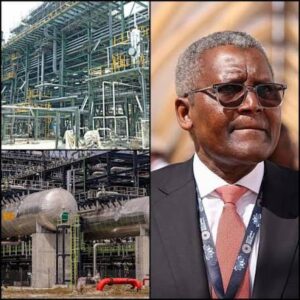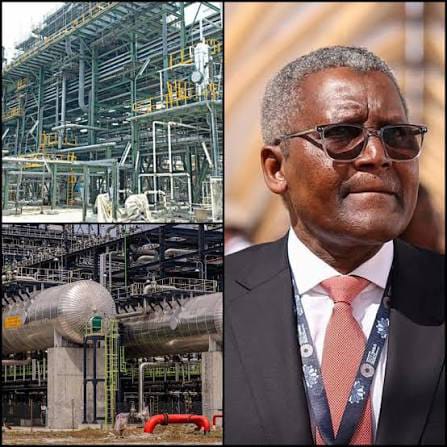
Dangote Petroleum Refinery reduced its debt by N798 billion in the first half of 2026 as the 700,000-barrel-per-day facility increased production and strengthened its cash flow.
The company’s prospectus showed that its total debt fell from $6.24 billion in December 2025 to $5.67 billion by June 2026, representing a $570 million reduction, equivalent to about N798 billion at an exchange rate of N1,400 to the dollar.
The debt reduction comes as the refinery moves into full commercial operations, with stronger sales and refining margins improving its financial position.
As of June, the refinery’s net debt-to-EBITDA ratio stood at 0.27 times, with the company expecting further improvement as production stabilises and cash generation grows.
The development comes ahead of Dangote Refinery’s planned Initial Public Offering, which is scheduled to open on September 14. The company plans to offer 4.1 billion new shares at N525 each.
Despite the planned share sale, Aliko Dangote is expected to retain control of the refinery. His beneficial ownership is projected to fall from 87.27 per cent to 84.34 per cent if the IPO is fully subscribed.
NNPC Limited’s stake is also expected to reduce slightly from 6.815 per cent to about 6.59 per cent.
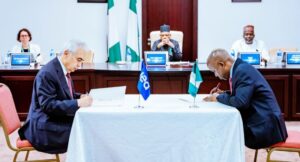
Dangote said the IPO was not primarily aimed at raising funds, noting that the refinery has strong cash generation and has already secured financing through bonds and private placements.
The refinery is currently operating at its full 700,000-barrel-per-day capacity and is increasing diesel and aviation fuel production to take advantage of stronger demand in the European market.
The company’s Chief Executive Officer, David Bird, said the refinery has the flexibility to adjust its product mix according to market conditions.
The strong refining margins are partly linked to disruptions in global petroleum markets caused by the ongoing US-Iran conflict. However, Dangote said the company’s long-term financial projections were based on normal market conditions rather than the current geopolitical crisis.
Meanwhile, Dangote Industries is planning another 700,000-barrel-per-day refinery in Lamu, Kenya, with the project estimated to cost between $15 billion and $16 billion.
The Kenyan project could face challenges securing crude because Kenya currently has no commercial-scale oil production. Potential supplies from Kenya, Uganda and South Sudan also face transportation and infrastructure hurdles.
Brent crude also crossed $100 per barrel as tensions between the United States and Iran intensified, increasing concerns over oil supplies through the Strait of Hormuz.