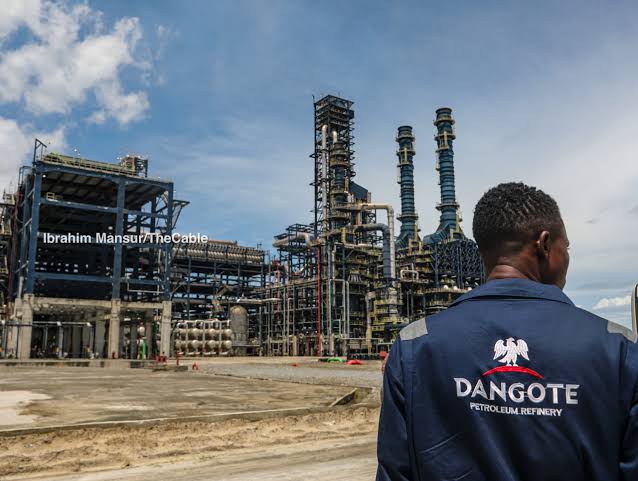
Nigeria’s Dangote Refinery is facing concerns over the cost and availability of crude oil as it prepares for a possible $5bn initial public offering (IPO) in October.
The refinery, Africa’s largest, is expected to use part of the funds from the proposed share sale to support plans to expand its capacity over the next three years.
The 650,000-barrels-per-day facility reached its initial maximum production capacity in February and has also tested production at 700,000 barrels per day.
Despite Nigeria being Africa’s largest crude oil producer, the refinery still depends significantly on imported crude. Dangote Refinery Chief Executive David Bird said imports account for about 30% to 40% of the facility’s crude intake.
The supply challenge is partly linked to the limited availability of Nigerian crude. Much of the crude controlled by the Nigerian National Petroleum Company Limited through its joint ventures is committed to oil-backed loans and pre-export arrangements, reducing the volume available to domestic refiners.
Cost is another concern. Dangote Industries said some Nigerian crude is priced against international benchmarks such as Brent, which can make domestic supplies expensive despite the refinery being located in Nigeria.
The company has therefore turned to other sources, including crude from the United States, Guyana and other African countries. However, imported crude is generally priced in dollars, exposing the refinery to additional costs.
Analysts said expensive crude could reduce the refinery’s profit margins and affect its ability to operate at high capacity. This could also have an impact on how investors value the company ahead of the planned IPO.
Rob Thummel, senior portfolio manager at Tortoise Capital Management, said heavy dependence on a single source of crude could increase the investment risk associated with the refinery.
Nigerian regulators are exploring ways to improve the supply of locally produced crude to domestic refiners. Oritsemeyiwa Eyesan, chief executive of the Nigerian Upstream Petroleum Regulatory Commission, said authorities were considering a crude swap arrangement that could connect refiners with local producers and reduce delivery delays and logistics costs.
Dangote’s coastal location also provides some flexibility, allowing the refinery to import crude when domestic supplies are insufficient.