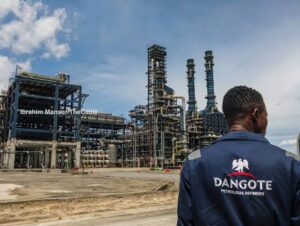
The Dangote Petroleum Refinery has been hailed as a game-changing force in Nigeria’s push toward industrialisation and economic independence.
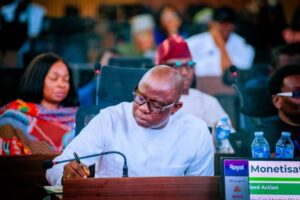
During a facility tour on Tuesday, the Technical Committee of the One-Stop Shop (OSS) for the sale of crude and refined products in naira declared the $20 billion project a major national asset.
“This refinery touches all our lives. There’s scarcely any sector unaffected. From pharmaceuticals to construction, food to plastics—this project is transformational,” said Mrs. Maureen Ogbonna, Coordinator of the OSS Technical Committee.
She described the massive complex as “a breath of fresh air” and “the beginning of an industrial revolution,” crediting the President of the Dangote Group for his vision and execution.
Ogbonna, who previously toured the refinery during its construction phase, praised the facility’s technological sophistication. “That lab alone is an institution. I don’t know of any institution in Nigeria—or even globally—that boasts such a laboratory for petrochemical,” she said.
She also urged Aliko Dangote to ignore critics and remain focused on the refinery’s long-term impact. “He was never self-centred. Despite the obstacles, he was driven by a vision for Nigeria’s future, reaching far beyond Africa,” Ogbonna added.
In response, Dangote thanked the committee for backing the naira-for-crude policy introduced under President Bola Tinubu’s administration. He noted the deal has already helped reduce petroleum product prices, stabilised the naira, and eased pressure on the dollar.
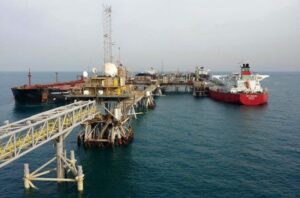
However, he expressed concern over the refinery’s increasing reliance on imported crude oil due to shortages in domestic supply. “This project required bold investment and major infrastructure, including a marine terminal that can handle the world’s largest vessels,” he said, reaffirming his commitment to Nigeria’s industrial growth.
The refinery, capable of processing 650,000 barrels per day, is designed to handle various crude grades from Africa, the Middle East, and the U.S. It is expected to meet all of Nigeria’s domestic fuel needs—with enough surplus for export.