Nigeria’s fuel market has witnessed a major shift as the Dangote Petroleum Refinery now supplies the majority of the country’s Premium Motor Spirit (PMS), surpassing imports for the first time in over a year.
Data from the Nigerian Midstream and Downstream Petroleum Regulatory Authority (NMDPRA) shows that in January 2026, domestic refineries delivered an average of 40.1 million litres of petrol per day, accounting for 62 per cent of the total daily supply of 64.9 million litres. Imported petrol made up the remaining 38 per cent.
This marks a significant departure from past trends where imported fuel dominated the market. The rise is largely attributed to Dangote Refinery’s ramped-up production, which increased from 32 million litres per day in December 2025 to 40.1 million litres in January, a 25 per cent month-on-month increase.
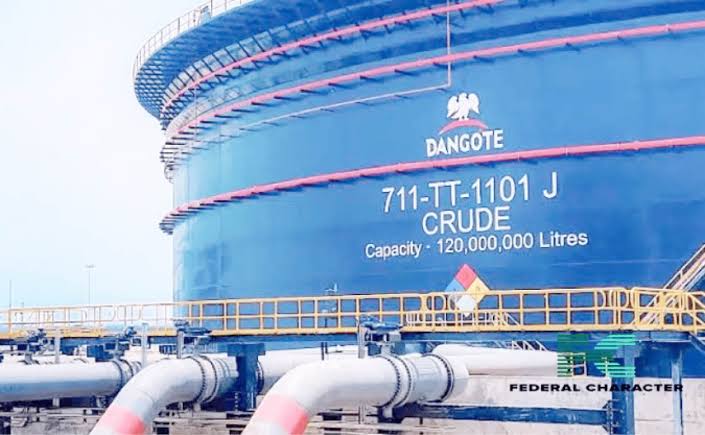
David Bird, the refinery’s CEO, confirmed that the facility now has the capacity to produce over 50 million litres of petrol daily. The refinery, the world’s largest single-train facility with a capacity of 650,000 barrels per day, began PMS production in September 2024 and has steadily increased output since then.
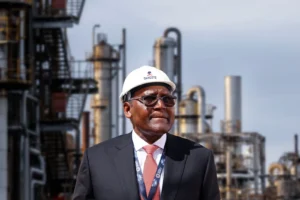
Aliko Dangote, President of the Dangote Group, highlighted the importance of domestic production, noting that excessive import licences issued in previous years had hurt local refining efforts. The refinery’s recent performance, however, demonstrates Nigeria’s potential for fuel self-sufficiency and reduced reliance on foreign suppliers.
Industry stakeholders see this development as a major boost for the economy. By relying more on local production, Nigeria could save foreign exchange, minimize exposure to global fuel price swings, and improve availability for consumers.
According to Eche Idoko, Publicity Secretary of the Crude Oil Refiners Association of Nigeria, the country’s domestic refineries, including Dangote, now have the capacity to meet most of Nigeria’s fuel demand, with the potential to fully replace imports if supported with sufficient crude supply.