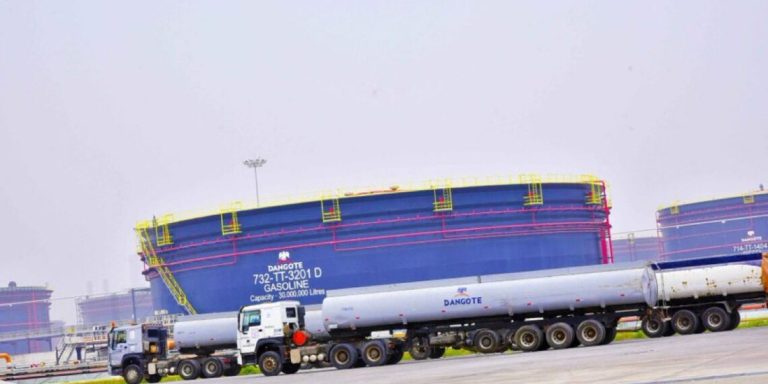
Dangote Petroleum Refinery and Petrochemicals has taken delivery of almost 250,000 metric tonnes of crude oil and intermediate petroleum inputs at its Lekki terminal, according to shipping data obtained from the Nigerian Ports Authority.
Vessel movement records show that multiple tankers berthed or were scheduled to berth at the refinery during the week, carrying a mix of crude oil and refinery feedstocks used in processing operations. The largest single shipment was crude oil loaded by the vessel Seaways Montauk, which delivered over 140,000 metric tonnes after departing from the Port of Ingleside in the United States in January.
Other deliveries included cracked gasoline, blended stock, and condensate or naphtha, transported by vessels such as Mostar, Maersk Trieste, and Ellie M II. When combined, the confirmed cargoes amounted to approximately 249,700 metric tonnes. Another vessel, Archagelos Micheal, was also listed to call at the terminal, with refinery officials explaining that it was scheduled to load Jet A1 fuel.
Shipping documents identified Dangote as the receiving terminal, with several maritime service firms handling the consignments. Industry sources described the imported materials as essential refinery inputs, including crude oil and blending components that are processed further before becoming market-ready products.
The refinery said the deliveries align with standard global refining practice and reiterated that it does not import finished petrol into Nigeria. It explained that the facility operates as a merchant refinery, sourcing different crude grades and intermediate feedstocks from the international market to optimise its processing units.
Management also dismissed claims suggesting the importation of finished Premium Motor Spirit (PMS), describing such reports as misleading. According to the company, the materials brought into the country are unfinished streams that require additional processing to meet regulated fuel specifications.
Dangote refinery noted that similar operating models are used in major refining hubs across Europe and Asia, where refineries combine crude oil with intermediate components to improve flexibility and efficiency. It added that mischaracterising these feedstocks as finished fuel undermines public understanding of domestic refining operations.
The company further stated that all petrol supplied to the Nigerian market from its facility meets Euro 5 standards and undergoes strict quality testing. It maintained that the refinery has helped improve fuel quality locally and reduce dependence on lower-grade imports.
Earlier, the refinery’s Managing Director, David Bird, explained that the plant was designed to convert low-value materials into higher-value products using advanced processing units. He said the ability to source feedstocks globally allows the refinery to keep these units fully utilised and maximise output.
Dangote reaffirmed its commitment to supporting Nigeria’s energy security, environmental goals, and economic growth through large-scale, world-class refining operations.