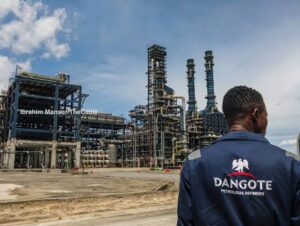
The Dangote Petroleum Refinery has reaffirmed its ability to supply petrol volumes well above Nigeria’s estimated daily consumption, saying its production capacity provides a strong buffer for the domestic fuel market.
In a statement issued on Thursday, the refinery said it can supply up to 75 million litres of Premium Motor Spirit (petrol) daily, compared with the country’s estimated consumption of about 50 million litres per day.
The refinery also disclosed that it has the capacity to supply 25 million litres of Automotive Gas Oil (diesel) daily, exceeding Nigeria’s estimated demand of 14 million litres, as well as 20 million litres of aviation fuel per day, far above the country’s maximum estimated requirement of four million litres.
According to the company, producing volumes above domestic demand helps to stabilise the market, strengthen supply reliability and reduce Nigeria’s dependence on imported fuel, particularly during periods of peak demand or logistical challenges.
Dangote Refinery stated that all its petroleum products meet international quality standards and are available to marketers and industry stakeholders across the country.
The company added that higher local supply reduces the need for emergency imports, improves inventory cover and enhances the resilience of Nigeria’s downstream petroleum supply chain.
It also reaffirmed its commitment to full regulatory compliance, noting that it continues to work closely with the Nigerian Midstream and Downstream Petroleum Regulatory Authority (NMDPRA) to support orderly market operations and national energy security goals.
The statement comes amid recent adjustments in petrol pricing. Earlier this week, the refinery increased its gantry price of petrol from ₦699 to ₦799 per litre, following the withdrawal of a temporary price support arrangement.
As a result, several filling stations adjusted pump prices, with petrol now selling for ₦839 per litre or higher in some locations. Market checks showed that marketers who had earlier processed loading documents at the old price were asked to pay the price difference before lifting products.
Despite the price increase, industry stakeholders say expanding domestic refining capacity could help Nigeria reduce foreign exchange exposure, improve supply security and strengthen efficiency in the downstream petroleum sector over time.