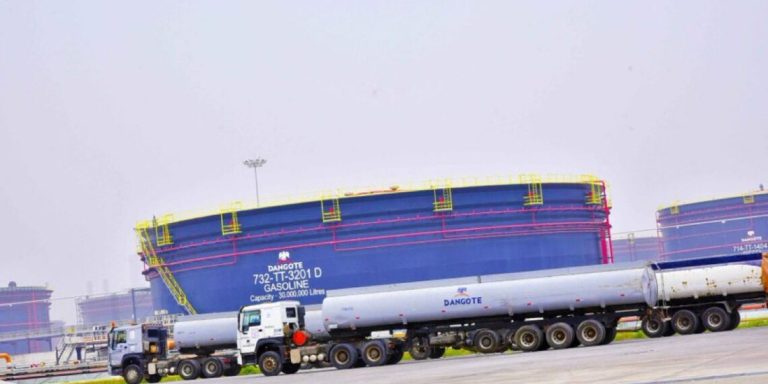
The Dangote Petroleum Refinery has filed a lawsuit against the Federal Government of Nigeria, contesting the recent decision to issue new fuel import licences to several petroleum marketing companies despite growing domestic refining output.
The case was brought before the Federal High Court in Lagos, where the refinery is seeking to stop what it describes as continued approval of petrol imports that it believes contradicts the country’s petroleum law framework. The dispute centers on licences recently granted by the Nigerian Midstream and Downstream Petroleum Regulatory Authority to a number of marketers, allowing them to bring in large volumes of Premium Motor Spirit into the country.
The approved import volumes reportedly run into hundreds of thousands of metric tonnes, with major oil marketing firms among the beneficiaries. The regulator had earlier slowed down or temporarily halted new import approvals following claims that local refining capacity had improved significantly.
The Dangote refinery argues that continued importation is unnecessary and undermines local production, especially as its facility has been supplying a large share of Nigeria’s daily petrol consumption in recent months. It maintains that the practice weakens investment in domestic refining and goes against provisions of the Petroleum Industry Act, which allows imports only when local supply is insufficient.
Industry observers say the situation highlights a growing tension between promoting local refining capacity and maintaining open market competition for fuel supply. While some stakeholders support continued imports to ensure stability and prevent shortages, others believe Nigeria should prioritize domestic production as refinery output increases.
In recent remarks linked to the refinery’s leadership, its chairman, Aliko Dangote, has also suggested that entrenched interests in the fuel import sector have historically resisted efforts to expand local refining. He argued that Nigeria’s long reliance on imported fuel has placed pressure on foreign exchange and contributed to inefficiencies in the energy market.
The legal action is expected to further intensify debates over fuel policy, competition, and energy security as Nigeria continues to adjust to changing refining capacity and market dynamics.