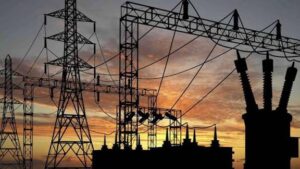
Electricity supply across Lagos has been hit by major disruptions following a shutdown at Egbin Power Station and a separate fault on a key transmission line feeding the state.
The Nigerian Independent System Operator said the incident began late on April 28 when Egbin suffered a serious mechanical failure that forced an emergency halt of all its generating units. Within a short time, the plant’s output reportedly dropped from over 600 megawatts to zero.
Engineers identified the problem as a failure of the station’s central compressor, along with a malfunction in the circulating water pump system. Both components are critical to safe plant operations, prompting a complete shutdown to prevent further damage.
The situation was compounded by an outage on the Osogbo–Ikeja West 330kV transmission line, a major corridor responsible for moving electricity into Lagos. The transmission failure has reduced the amount of power that can be delivered into the state’s electricity network.
With both generation and transmission affected, grid operators have introduced load-shedding measures to maintain stability and prevent a wider collapse of the national grid. Available electricity is now being rationed among distribution companies, with priority given to hospitals, security facilities, and other essential services.
Officials said efforts are ongoing to increase output from other power plants to reduce the impact on consumers while repairs continue at Egbin and on the transmission line.
The operator apologised for the inconvenience to residents and assured the public that engineers and relevant stakeholders are working to restore supply as quickly as possible.
Located in Ikorodu, Egbin remains the largest thermal power plant connected to Nigeria’s national grid, with an installed capacity of more than 1,300 megawatts, making it a critical source of electricity for Lagos and surrounding areas.