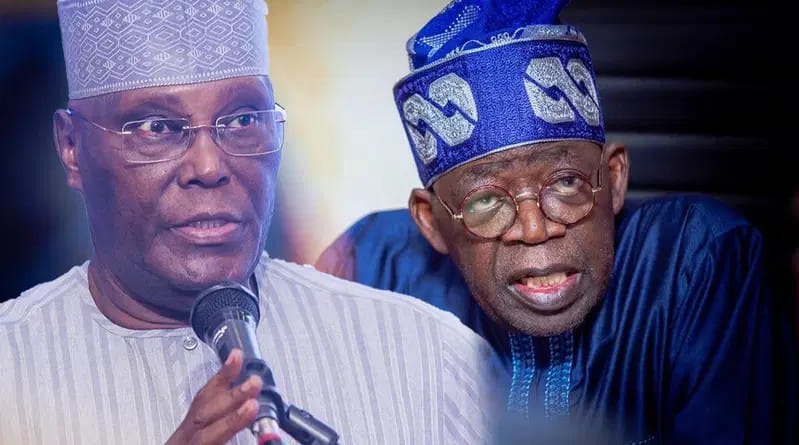
The Federal Government and the All Progressives Congress have rejected former Vice President Atiku Abubakar’s proposal to restore petrol subsidy if elected president in 2027, arguing that the policy could worsen Nigeria’s fiscal challenges.
Atiku, the African Democratic Congress presidential candidate, recently proposed a targeted and transparent subsidy system as part of his Economic Recovery Plan for 2027. He said the measure would help reduce the pressure of high fuel prices on Nigerians while supporting local refineries through preferential crude supply arrangements.
He also questioned how the savings from the removal of petrol subsidy had been utilised, arguing that Nigerians had yet to experience sufficient benefits from the reform.
However, APC National Chairman, Nentawe Yilwatda, described the proposal as a policy reversal that failed to address how the government would finance the cost of subsidising petrol.
Yilwatda said the removal of subsidy, although difficult for Nigerians, was necessary to reduce pressure on government finances and create room for investment in productive sectors.
He urged voters to examine the economic plans of presidential candidates ahead of the 2027 election rather than support policies he described as election-season promises.
Minister of Information and National Orientation, Mohammed Idris, also defended the Tinubu administration’s decision, saying the reform had generated additional resources for the Federal Government, states and local governments.
According to Idris, subsidy reform released N15.8tn to the federation between June 2023 and December 2025. He said the Federal Government received about N5.43tn, while states and local governments received approximately N6.52tn and N3.88tn respectively.
The minister stressed that the funds were not kept in a separate account but formed part of the resources available to the three tiers of government.
Idris said the additional revenue had helped finance infrastructure, social programmes and human capital development. He cited about N6.47tn spent on strategic infrastructure and said more than 10 million households had benefited from social intervention programmes.
He warned that returning to petrol subsidy could recreate the problems associated with the former system, including fuel shortages, arbitrage and increased government borrowing.
The minister also argued that Nigeria could not sustain petrol subsidy while continuing to finance electricity subsidies, noting that N3.14tn had been spent on electricity consumption subsidies between June 2023 and December 2025.
Atiku, however, maintained that the government was applying inconsistent economic principles by offering incentives to large petroleum investors while rejecting measures aimed at reducing the burden on ordinary Nigerians.
Through his Senior Special Assistant on Public Communication, Phrank Shaibu, Atiku argued that government intervention should not be considered acceptable for investors but unacceptable when used to cushion citizens against rising living costs.
He also questioned the treatment of certain expenses recorded by the Nigerian National Petroleum Company Limited, arguing that billions of naira spent on energy-security costs and related shortfalls showed that government intervention in the petroleum market had not completely disappeared.
Atiku said Nigerians were bearing the consequences of higher petrol prices through increased transportation, food and production costs.
His position has received support from some ADC members. Former Edo governorship aspirant Kenneth Imasuagbon said the subsidy removal had worsened the economic situation of many Nigerians and backed Atiku’s proposal for a targeted and accountable system.
Similarly, ADC governorship candidate in Sokoto State, Manir Dan’Iya, said a carefully managed subsidy programme could help reduce transportation and production costs.
Dan’Iya stressed that any new subsidy arrangement should be transparent, targeted and linked to increased domestic refining capacity.
But member of the House of Representatives representing Agege Federal Constituency, Wale Ahmed, opposed Atiku’s proposal, saying Nigeria could not afford to return to a system that placed a heavy burden on public finances.
Ahmed argued that the priority should be ensuring that the increased revenue from subsidy removal translates into better infrastructure, healthcare, education, transportation and security.
The disagreement over petrol subsidy is expected to remain a major issue ahead of the 2027 presidential election, with the Tinubu administration defending the reform as necessary for economic stability, while opposition politicians argue that the policy has intensified hardship and reduced Nigerians’ purchasing power.
Both sides are now presenting contrasting approaches to the country’s economic future, with subsidy policy likely to become a major point of debate during the 2027 campaign.