
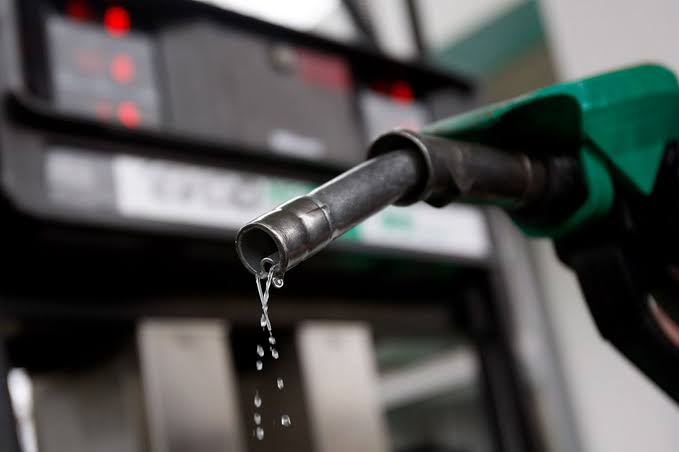
Despite a recent slash in ex-depot petrol prices by Dangote Refinery, fuel prices at the pump remain unchanged across many parts of Nigeria, as marketers hold off on passing the reduction to consumers.
The refinery announced a drop in its petrol price from ₦880 to ₦840 per litre, effective June 30, following the easing of tensions in the Middle East and a corresponding drop in global crude oil prices. However, several fuel station operators say they are unable to reduce pump prices until they clear out stock purchased at higher rates.
Independent marketers argue that selling at a lower rate would mean heavy financial losses, especially for those who bought at around ₦900 per litre. With many holding stock from the previous pricing regime, they insist new pump prices won’t take effect until that fuel is sold out.
A survey across Lagos, Ogun, and other southwestern states revealed that pump prices remain between ₦920 and ₦935 per litre, despite depot prices now averaging ₦845. Even NNPC-owned stations are yet to reflect the new pricing, still selling petrol for ₦915 in Lagos and ₦925 in Ogun.
Industry experts suggest the pump price could drop below ₦890 with Dangote’s new rate, but caution that adjustments won’t happen overnight. Billy Gillis-Harry, president of the Petroleum Products Retail Outlet Owners Association of Nigeria (PETROAN), explained that selling off old inventory is necessary before prices can realistically fall.
“If a retailer bought 45,000 litres at ₦920 and the price drops to ₦840, that’s an ₦80 per litre loss. No one can afford to write that off,” he said.
He warned that fluctuating prices, like the recent hikes triggered by the Iran-Israel conflict, could destabilize the industry and called for more predictable pricing structures. PETROAN has previously advocated for a six-month stability window to prevent repeated shocks to retailers and consumers alike.
Other marketers echo similar concerns, blaming price stagnation on unsold high-cost inventory. They also pointed out that some stations that purchased new stock at the reduced rate may soon start offering cheaper fuel, eventually forcing others to follow suit.
Meanwhile, crude oil prices have continued to dip, with Brent dropping below $70 per barrel and West Texas Intermediate nearing $65 down from highs of over $77 and $73 respectively during the recent conflict.
As fuel supply steadies and old stock clears out, consumers may start to see some relief at the pumps in the coming weeks but not just yet.