Nigeria’s drive toward cleaner and more affordable transport has gained momentum as Innoson Vehicle Manufacturing (IVM) Limited, the country’s leading indigenous automaker, unveils plans to establish a Compressed Natural Gas (CNG) vehicle assembly plant in Bayelsa State.
The project marks a major step in Nigeria’s transition away from petrol dependency toward natural gas–powered mobility, in line with the federal government’s Presidential CNG Initiative.
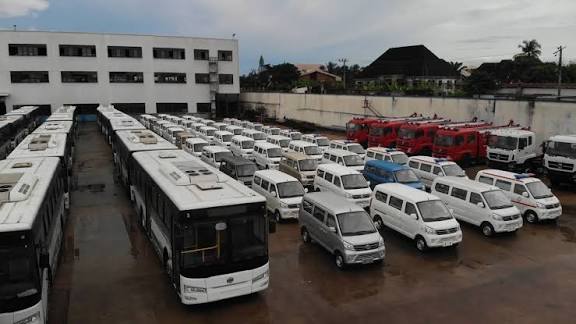
During a courtesy visit to Governor Douye Diri in Yenagoa, Innoson founder and CEO Innocent Chukwuma announced that the new facility will assemble CNG-powered buses, ambulances, and passenger vehicles. He said the plant will serve as a hub for technical training and local job creation, helping to strengthen the state’s industrial base and support national energy goals.
Chukwuma noted that the investment will generate over 1,000 direct and indirect jobs, including roles in assembly, logistics, and maintenance. He added that the initiative reflects IVM’s commitment to advancing Nigeria’s renewable energy agenda ahead of the 2030 clean energy target.
Nigeria’s growing CNG market — estimated to be worth $10 billion within the next five years — has become a key focus for both public and private investors. According to the Presidential Compressed Natural Gas Initiative (Pi-CNG), the shift could significantly cut fuel costs and emissions while boosting the economy.
National efforts are already underway to expand CNG infrastructure. The Nigerian National Petroleum Company (NNPC) Limited, in partnership with NIPCO Gas, has commissioned 12 CNG refuelling stations and plans to develop more than 100 additional outlets across the country, along with three liquefied natural gas (LNG) sites.
Other agencies are also stepping in to localize production. The National Agency for Science and Engineering Infrastructure (NASENI) recently teamed up with Adeayworld Energy to manufacture CNG conversion kits domestically, while SMEDAN and Rolling Energy have launched a program to convert over 100,000 vehicles and train small businesses in CNG maintenance.
Private investment is growing too, with new projects such as a 5.2 million standard cubic feet per day CNG plant in Lagos—the largest of its kind in Nigeria—and the Anoh CNG Park in Imo State, which benefits from proximity to the Assa North-Ohaji gas fields.
Analysts say Innoson’s decision to set up a dedicated CNG assembly plant demonstrates how local manufacturers are positioning themselves at the forefront of Nigeria’s clean energy transition. As fuel prices remain high and environmental concerns deepen, the country’s shift to CNG-powered vehicles is emerging as both an economic necessity and a sustainability milestone.