Kenya Pipeline Company (KPC), the state-owned energy firm currently listing a 65% stake through an initial public offering (IPO), has announced plans to more than triple its capital expenditure over the next five years.
The company intends to invest 110 billion Kenyan shillings ($852.6 million) in projects aimed at expanding its pipeline network, increasing storage capacity, and diversifying into natural gas.
This marks a sharp rise from the 34 billion shillings spent between 2021 and 2025, according to the IPO prospectus.
Funding for the expansion will come from a mix of internal cash flows and innovative financing options, including debt markets, joint ventures, and special project financing structures.
Proceeds from the IPO, valued at $824 million, will not be retained by KPC but will instead be allocated to a government infrastructure fund supporting mega projects.
Key initiatives include a new pipeline linking Eldoret to Uganda’s capital, Kampala, with extensions to Rwanda, as well as an oil trading hub in the port city of Mombasa. The hub will also serve as the site for a bulk natural gas facility to support electricity generation from imports from Tanzania. Additional storage facilities for Kenya’s strategic petroleum reserves are also planned.
KPC is exploring the commercialization of a power plant at the former Kenya Petroleum Refineries Ltd. site, with plans for solar energy generation. Meanwhile, a crude refinery closed in 2013 is set to be converted into a biofuel facility producing blending components and sustainable aviation fuel, with studies being conducted by Eni SpA.
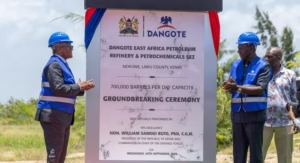
The company also noted potential challenges, highlighting Uganda’s planned refinery, set to begin operations by 2030, as a risk to KPC’s regional growth strategy. KPC cautioned that regional consumption levels may take time to support large-scale refining and that imported refined products could remain more competitive over the long term.