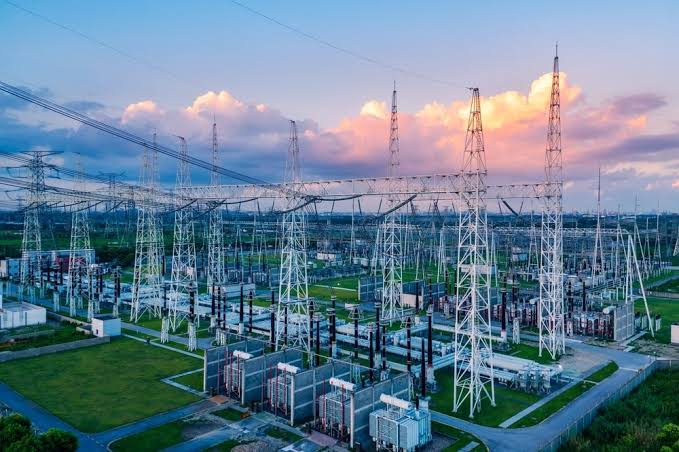
The Lagos State Government has rolled out an ambitious plan to deploy smart grids as part of its newly launched electricity road map, aimed at providing stable, efficient, and tech-driven power to millions of residents.
Anchored on the Lagos State Electricity Law, 2024 — signed by Governor Babajide Sanwo-Olu in December — the initiative empowers the state to regulate its own electricity market, covering generation, transmission, distribution, and trading.
In a statement released on Wednesday, Adetola Idowu, Deputy Director of the Public Affairs Unit at the Ministry of Energy and Mineral Resources, revealed that the Lagos Electricity Market (LEM) will be a fully coordinated ecosystem built on digital technologies.
Commissioner for Energy and Mineral Resources, Biodun Ogunleye, described the new law as a major turning point:
“It sets the foundation for modern, technology-driven energy solutions.”Ogunleye explained that the LEM will incorporate smart grids and embedded generation while using data to ensure transparency and consumer protection.
“The LEM will be powered by digital tools to monitor power generation and usage in real-time. We will ensure transparency, promote investor confidence, and protect end-users,” he said.
Smart grids — defined by the International Energy Agency as networks using digital tools, sensors, and software to balance electricity supply and demand — will be at the core of Lagos’ energy transformation.
The commissioner also highlighted plans to reduce import dependence by exploring local manufacturing of key electricity infrastructure like transformers, meters, cables, and switchgears in partnership with private sector investors.
He stressed the importance of collaboration across levels of government: “We’re ready to work with the Federal Government and other states to ensure a just and coordinated energy transition.”
With this move, Lagos is positioning itself as the first sub-national entity in Nigeria — and one of the few in Africa — to operate a fully regulated and independent electricity market. “With these bold initiatives, Lagos is well on its way to delivering stable, scalable, and sustainable power for development,” the statement concluded.