
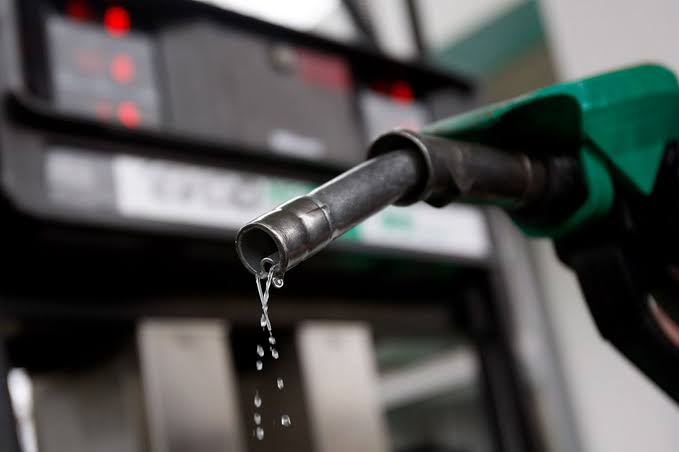
Tensions have emerged in Nigeria’s downstream petroleum sector as local refinery operators and fuel marketers take opposing positions on the continued importation of refined petroleum products.
The Crude Oil Refineries Association of Nigeria has urged the Federal Government to scale back fuel imports and prioritise products refined locally, arguing that imports should only be used to supplement supply when domestic capacity falls short.
However, petroleum marketers, operating under the Petroleum Products Retail Outlet Owners Association of Nigeria, have countered this position, insisting that the import window should remain open throughout 2026 to avoid supply disruptions.
In a position paper circulated to journalists on Monday, CORAN said commitment to Nigeria’s downstream industry should be assessed by long-term investment and risk exposure rather than short-term trading activity. The association argued that local refinery companies have demonstrated confidence in the country by investing heavily in fixed refining assets that cannot be easily relocated or abandoned.
According to CORAN, refining is among the most capital-intensive segments of the oil and gas value chain, exposing investors to multiple risks including crude supply uncertainty, foreign exchange volatility, infrastructure bottlenecks, power challenges, and policy inconsistency.
Once a refinery is constructed, the association noted, investors are locked in for the long term.
The group stressed that refining represents an industrial commitment to Nigeria’s future, adding that local refiners ranging from modular to large-scale facilities have collectively invested billions of dollars in downstream infrastructure that only becomes viable if the country succeeds as a refining hub.
CORAN contrasted this with what it described as decades of import-led dominance in the downstream sector, particularly during the fuel subsidy era. While fuel importation was highly profitable at the time, the association said it did not translate into meaningful investment in domestic refining capacity.
Citing data from the National Bureau of Statistics, CORAN noted that Nigeria imported more than 20 billion litres of petrol in 2023, only slightly below 2022 figures. It also referenced trade data reported by Reuters showing that petrol imports rose sharply to about ₦15.4 trillion in 2024, up from roughly ₦7.5 trillion the previous year.
The association warned that heavy reliance on imports continues to drain foreign exchange and deprives the local economy of opportunities in refining, storage, logistics, petrochemicals, and industrial employment.
It argued that wealth generated during years of fuel importation largely flowed into real estate, financial assets, and upstream acquisitions rather than downstream infrastructure.
CORAN said the disagreement reflects two competing visions for Nigeria’s downstream sector: one focused on domestic value addition, energy security, and industrial resilience, and the other centred on continued access to foreign exchange, ports, and import licences.
The group called on the Federal Government to adopt more deliberate policies to support domestic refining, including guaranteed crude supply for local refineries, rule-based allocation mechanisms, fair foreign exchange treatment, and conditional import licensing where local capacity is available.
It also warned that continued dependence on imported fuel exposes the country to foreign exchange shocks, supply disruptions, and fiscal instability, while a strong domestic refining base would enhance energy security and economic sovereignty.
The debate comes amid renewed criticism from the Dangote Group, which has accused regulators of issuing import licences even when local supply was reportedly sufficient. Dangote Refinery has called on the Nigerian Midstream and Downstream Petroleum Regulatory Authority to halt fuel import permits..
In response, PETROAN maintained that Nigeria cannot currently rely on a single source for fuel supply. Its spokesperson, Joseph Obele, said the association’s position remains that fuel importation should remain open throughout 2026 to prevent shortages.
Obele added that any disruption to local refinery operations could trigger scarcity, reinforcing the need for multiple supply sources. He stressed that PETROAN’s stance has not changed and that willing traders should be allowed to import fuel to stabilise the market.