Nigeria is emerging as the major force behind West Africa’s expanding oil and gas industry, accounting for about 60 percent of the region’s projected growth, according to a new report by Deloitte.
The 2025 West Africa Oil and Gas Outlook highlights that the regional market is expected to grow at an annual rate of 6.5 percent between 2025 and 2033, driven by rising global energy demand and the region’s abundant hydrocarbon reserves. The report estimates the sector’s potential value at around $80 million, with Nigeria and Ghana contributing the largest shares — approximately 60 percent and 20 percent respectively.
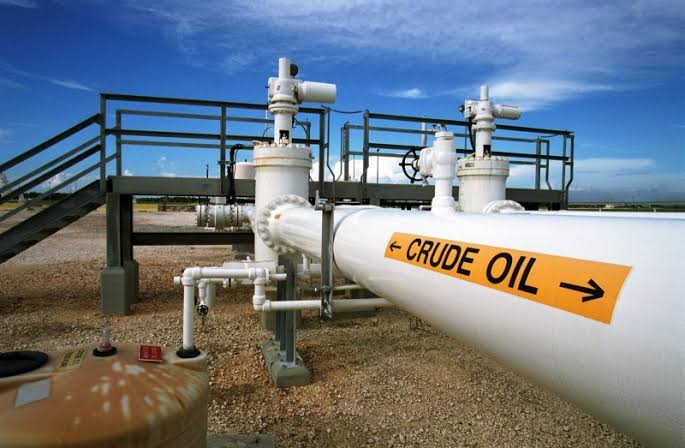
The report underscores Nigeria’s continued dominance in crude production, averaging 1.5 million barrels per day (bpd) at the end of 2024, ahead of Angola’s 1.4 million bpd. Deloitte described this output as a testament to the region’s strategic importance but also noted that challenges remain for both policymakers and operators as they navigate the global energy transition.
Nigeria’s recent policy reforms and investment-friendly environment under the current administration have played a key role in attracting fresh capital into the sector. A major milestone came this week when Shell announced a $2 billion investment in the HI Field — a shallow offshore gas project under Oil Mining Lease 144. The project marks Nigeria’s second major gas investment in the past 18 months, boosting confidence in the country’s energy market.
According to government figures, total upstream investment commitments have now surpassed $8 billion since President Bola Tinubu assumed office in 2023.
The Nigerian Upstream Petroleum Regulatory Commission (NUPRC) also projects a significant jump in oil production, with an expected increase of 600,000 barrels per day from new projects and field developments. Commission Chief Executive Gbenga Komolafe said 28 new Field Development Plans approved in 2025 will deliver nearly 600,000 barrels of oil and 2 billion standard cubic feet of gas per day, backed by $18.2 billion in committed capital expenditure.
Komolafe, speaking at the 2025 World Energies Summit in London, explained that these projects represent a major shift in investor confidence, supported by the government’s reforms, including the Petroleum Industry Act (PIA) and Executive Orders issued in 2024 to incentivize investments.
He added that the number of active rigs has surged from just eight in 2021 to 70 in 2025, with 41 currently drilling — a strong indicator of renewed investor activity. Nigeria’s daily production has also risen to about 1.8 million barrels per day, reflecting the success of licensing rounds and new exploration campaigns.
Recent major investment decisions such as the $5 billion Bonga North Project and $500 million Ubeta Gas Project further demonstrate growing confidence in the sector’s long-term prospects.
Komolafe emphasized that Nigeria’s oil and gas reforms are aligned with its “Decade of Gas” strategy, which prioritizes both energy security and climate responsibility. He noted that the government has introduced a comprehensive Decarbonisation Framework to encourage carbon capture, storage, and access to carbon markets.
He also highlighted that the PIA has enhanced transparency, fiscal stability, and investor confidence by introducing globally benchmarked regulations.
As Nigeria prepares to launch its next Block Licensing Round, Komolafe invited both local and foreign investors to take advantage of emerging opportunities across the nation’s mature and frontier basins.
The renewed momentum in Nigeria’s upstream oil and gas sector — supported by policy clarity, robust reforms, and a strong investor base — positions the country as the key driver of West Africa’s energy growth over the next decade.