President Bola Tinubu has said Nigeria is gradually reducing its dependence on crude oil revenue as the Federal Government expands investment in non-oil sectors and seeks to attract more capital into the economy.
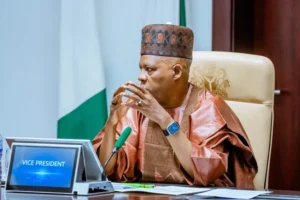
Tinubu stated this on Tuesday in Abuja at the fifth anniversary of the Nigerian Upstream Petroleum Regulatory Commission, NUPRC. Vice President Kashim Shettima represented the President at the event.
The President said agriculture, manufacturing, digital businesses and the creative industry were among the areas being developed as part of efforts to diversify the economy.
He added that while the government would continue to support the oil and gas industry, petroleum resources should increasingly be used to strengthen other areas of the economy rather than serve as the country’s main source of growth.
Tinubu also pointed to reforms in the petroleum sector, including a February executive order requiring oil and gas revenues due to the Federation to be paid directly into the Federation Account.
The order also removed some deductions previously made by NNPC Limited, including a 30 per cent management fee on profit oil and profit gas.
Despite the diversification drive, oil remains a major source of government revenue and foreign exchange. The sector has continued to face challenges linked to crude production, international oil prices, security and operational difficulties.
According to figures cited at the event, Nigeria budgeted N937.10 billion in oil and gas revenue for the first two months of 2026 but received only N137.41 billion during the period.
Tinubu said improved security and cooperation between oil producers, host communities, security agencies and the NUPRC had contributed to greater stability in crude production.
The Minister of State for Petroleum Resources, Oil, Heineken Lokpobiri, said Nigeria was currently producing about 1.7 million barrels of crude oil per day and had more than 37 billion barrels of oil reserves.
He called for increased investment, further licensing rounds and more exploration to develop the country’s petroleum resources.
NUPRC data showed that the regulator had approved more than $57 billion in Field Development Plans since 2024. The plans include 22 major offshore projects expected to begin production between 2026 and 2030, with projected investments of between $30 billion and $50 billion.
Nigeria had 37.01 billion barrels of oil and condensate reserves as of January 2026, while its gas reserves stood at 215.19 trillion cubic feet.
Tinubu also described the coming period as a “decade of gas”, saying the government planned to expand gas supply for electricity generation, industries and clean cooking while reducing gas flaring and methane emissions.
He said Nigeria’s energy transition would be designed around the country’s development needs, with the government seeking to meet climate commitments without restricting access to affordable and reliable energy.
The President further urged the NUPRC to maintain transparent regulatory processes and reduce delays that could discourage investors. He said concerns over high costs, lengthy contracting procedures and uncertainty around fiscal terms remained obstacles to investment in complex petroleum projects.
Tinubu also called on oil and gas operators benefiting from government incentives to fulfil their obligations on work programmes, local content, environmental protection and host communities.