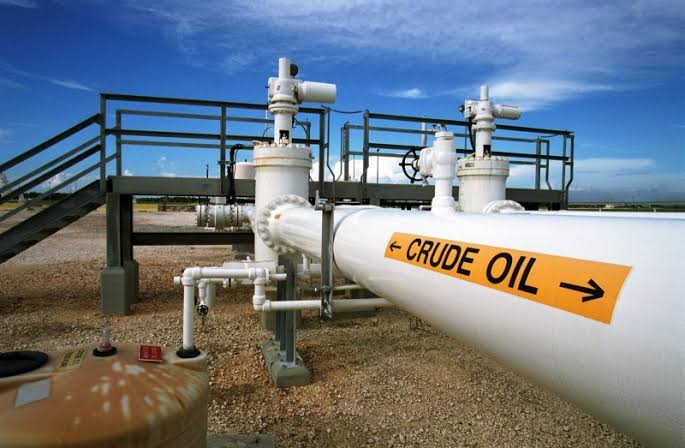
Nigeria spent a staggering N1.19 trillion importing crude oil in the first quarter of 2025, making it the country’s third most imported commodity, according to new data from the National Bureau of Statistics (NBS).
Despite being Africa’s largest oil producer, Nigeria continues to import crude due to “weak domestic supply to local refineries,” the NBS noted in its Q1 2025 Foreign Trade in Goods Statistics.
The imported crude—classified as “Petroleum oils and oils obtained from bituminous minerals, crude”—made up 7.7% of total imports, trailing only gas oil (N1.83 trillion) and motor spirit (N1.76 trillion).
“The growing reliance on imported feedstock,” the report explains, is caused by “inconsistent domestic crude allocation to refineries,” which has forced operators to look abroad for more stable and commercially viable sources.
The United States dominated Nigeria’s import sources, supplying N726.84 billion worth of crude, roughly 61% of the total imported volume. Angola followed with N223.58 billion, and Algeria with N122.37 billion.
Though specific recipients were not named, the trend reflects the broader downstream sector challenges, with even major facilities like Dangote Refinery and modular refineries opting for international crude due to failed policies like the Domestic Crude Supply Obligation and Domestic Crude Refining Requirement.
In total, Nigeria imported N4.78 trillion worth of petroleum products—over 30% of the country’s import bill. Mineral fuels alone accounted for N4.97 trillion, or 32.23% of all imports.
Ironically, Nigeria also exported N12.96 trillion in crude and petroleum products, representing 62.89% of total exports. However, crude exports fell 16.35% year-on-year, highlighting growing structural cracks in the sector.
Top destinations for Nigerian crude included India, the Netherlands, the U.S., France, and Spain—a reminder of the country’s ongoing dependence on foreign demand even as local refineries struggle to secure domestic supply.
The report concludes that the “mismatch between abundant local production and the lack of local utilisation” raises serious questions about Nigeria’s ability to achieve refining self-sufficiency or successfully reform its downstream oil sector.