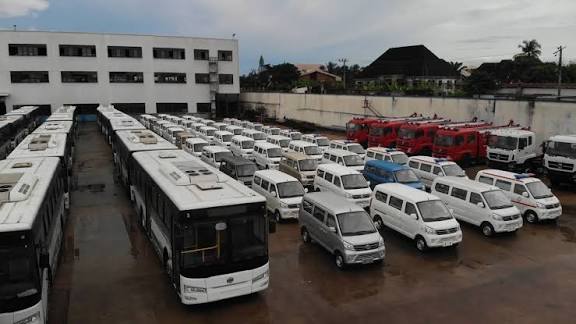
Nigeria has officially launched 40 electric buses in Abuja as part of the government’s efforts to promote cleaner, more affordable transportation nationwide. The initiative, led by the Presidential Initiative on Compressed Natural Gas (PiCNG), marks a major step in the country’s shift toward electric mobility and sustainable energy.
At the unveiling, Minister of State for Gas, Ekperikpe Ekpo, described the rollout as “a statement of intent” for Nigeria’s clean-energy future. Represented by his aide, Abel Igheghe, the minister emphasized that electric vehicles are key to creating new industries, generating jobs, and providing opportunities for local innovators.
“This initiative is about more than just showcasing technology,” Ekpo said. “It reflects Nigeria’s commitment to adopting cleaner fuels such as CNG, LPG, LNG, and electric mobility, while ensuring affordable transport options for citizens.”
The buses are set to be deployed within the week and will operate across multiple states, offering cheaper and cleaner transport, particularly during the festive season. To ensure reliability, PiCNG will power charging stations with compressed natural gas (CNG), taking advantage of Nigeria’s abundant sunlight and gas resources.
PiCNG’s Executive Chairman, Ismael Ahmed, called the project a milestone in Nigeria’s clean-mobility transition. “This is clean, affordable, and accessible energy for ordinary Nigerians,” he said. He added that the rollout complements PiCNG’s broader strategy to expand CNG and electric vehicle infrastructure nationwide.
The initiative aligns with President Bola Tinubu’s “gas-to-prosperity” strategy, which promotes gas as a transition fuel while supporting the growth of electric mobility technology. PiCNG plans to expand the programme into Kano, Kaduna, Gombe, Maiduguri, and Katsina, ensuring nationwide access to cleaner transport solutions.
Since its launch in 2023, PiCNG has activated CNG services in 28 states, built over 58 refueling stations, deployed thousands of CNG-powered vehicles, trained over 6,000 Nigerians, and attracted more than $2 billion in investment.
“This rollout is not just about reducing carbon emissions,” Ahmed said. “It’s about creating industries, jobs, investments, and opportunities for Nigerian innovators, while lowering transport costs and positioning Nigeria as a leader in clean mobility.”
The deployment of these 40 electric buses represents the first major public rollout under Nigeria’s EV roadmap and underscores the government’s commitment to a sustainable, low-carbon transport future.