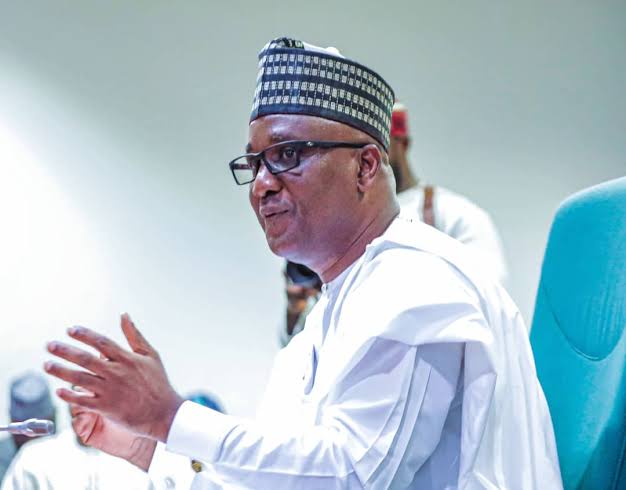
Nigeria is stepping up as a continental leader in renewable energy, with an ambitious goal to help provide electricity to 300 million Africans by 2030, Speaker of the House of Representatives Rt. Hon. Abbas Tajudeen has announced.
Speaking at the First Legislative Conference and Expo on Renewable Energy in Lagos, Abbas declared that Nigeria’s role in the Mission 300 Initiative—in partnership with the World Bank and African Development Bank—signals its bold commitment to clean and inclusive energy across Africa.
“On the continental stage, Nigeria has assumed a leadership role,” Abbas said. “Through our participation in the Mission 300 Initiative, we are working to provide electricity to 300 million Africans by 2030.
”The Speaker praised President Bola Tinubu for approving a $1 billion financing package in December 2024 for the Rural Electrification Agency, noting that $750 million would go toward solar mini-grids and home systems, benefitting over 200,000 Nigerians.“These are game-changing investments.
They show what’s possible when policy, financing, and legislation align,” he stated.Abbas emphasized legislative strides, including the elimination of VAT on renewable energy components and the creation of a standing committee on renewable energy.
He said these moves are part of Nigeria’s broader Energy Transition Plan targeting net-zero emissions by 2060.“Our legislative agenda recognizes energy reform as central to our national priorities,” he said.
Ghana’s Deputy Speaker of Parliament, Hon. Bernard Ahiafor, echoed the call for action, warning that “Africa remains underpowered, with over 600 million people still without electricity, despite holding 60% of the world’s solar potential.”
UNDP Resident Representative Elsie Atafuah called this a defining moment for Nigeria. “The next superpowers will be those who master the green value chain,” she said.
“Nigeria has the people, the resources, and the influence to lead.”Hon. Afam Ogene, chair of the organizing committee, called for urgent action, stating: “The persistent power supply challenges we face are not just technical—they are a barrier to national development.”
He also revealed that investigations into past renewable energy investments are underway, adding, “Every solar panel and clean energy initiative represents potential jobs and skills development.”
The conference brought together lawmakers, investors, and development partners in a united push for strong legislation, innovative financing, and scalable clean energy solutions.“
Let us not lose the momentum we’ve built,” Abbas urged. “Let this conference be remembered not just for the conversations it sparked but for the change it inspired.”