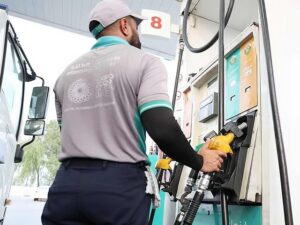
Companies listed on the Nigerian Exchange (NGX) spent about ₦400.83 billion on alternative energy sources in the first quarter of 2026 as unreliable electricity supply continued to push businesses towards self-generated power.
An analysis of the unaudited first-quarter financial statements of listed firms shows that spending on diesel, gas and other alternative energy sources rose by 3.7 per cent from ₦386.67 billion recorded during the same period in 2025.
The review also found that businesses reporting electricity and power expenses separately saw those costs jump by 81.5 per cent, increasing from ₦3.85 billion to ₦6.99 billion, reflecting the combined impact of higher electricity tariffs and continued reliance on backup power.
Manufacturing companies accounted for the largest share of alternative energy spending, with cement and industrial producers leading the way due to their high energy requirements. Oil and gas firms and banks with extensive branch networks also recorded significant expenditure on independent power generation.
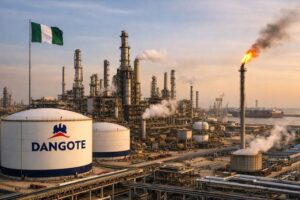
Among the companies reviewed, Dangote Cement recorded the highest alternative energy bill at ₦184.87 billion, followed by BUA Cement with ₦67.34 billion and Eterna with ₦60.77 billion. In the banking sector, United Bank for Africa spent ₦40.63 billion, while Zenith Bank reported ₦22.71 billion and First HoldCo spent ₦9.92 billion on power-related expenses.
Other firms with notable energy costs included Beta Glass, Transnational Corporation, Aradel Holdings, Wema Bank, and BUA Foods, all of which disclosed spending on diesel, fuel or electricity during the quarter.
While overall spending increased, some companies managed to reduce their energy costs through improved efficiency or changes in their energy mix. BUA Cement, Transnational Corporation, Beta Glass, Dangote Sugar Refinery, and Nigerian Flour Mills all reported lower alternative energy expenses compared with the previous year.
On the other hand, several businesses recorded sharp increases. Union Dicon Salt posted one of the largest percentage increases in fuel costs, while Aradel Holdings and Zichis Agro Allied Industries also reported significantly higher diesel expenses.
Electricity bills also rose across several sectors. UAC of Nigeria recorded one of the steepest increases in electricity costs, while Fidelity Bank, Champion Breweries, Vitafoam Nigeria, Livestock Feeds, Wema Bank, and BUA Foods also reported higher power expenses.
Economist Akpan Ekpo, a professor of Economics and Public Policy at the University of Uyo, said the figures highlight the high cost of doing business in Nigeria, warning that poor electricity supply continues to weaken industrial competitiveness.
He noted that businesses often transfer higher operating costs to consumers and cautioned that persistent dependence on self-generated electricity could discourage new investments, as investors may favour countries with more reliable power infrastructure.
The spending pattern showed that industrial goods companies accounted for nearly two-thirds of total alternative energy expenditure, while financial institutions and oil and gas firms also remained among the country’s biggest spenders on independent power.
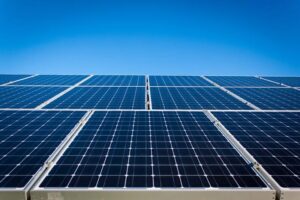
Industry stakeholders have renewed calls for greater investment in renewable energy and improved electricity infrastructure to reduce businesses’ dependence on diesel generators.
The Managing Director of the Rural Electrification Agency, Abba Aliyu, recently said renewable energy should be viewed as essential infrastructure for manufacturing, agriculture and digital services rather than being limited to rural electrification.
Similarly, Leye Kupoluyi, President of the Lagos Chamber of Commerce and Industry, said expanding renewable energy adoption could improve energy security, lower operating costs and strengthen industrial growth.
The Chief Executive Officer of the Centre for the Promotion of Private Enterprise, Dr. Muda Yusuf, also stressed the need for comprehensive electricity sector reforms, including stronger governance, improved transmission infrastructure, expanded decentralised renewable energy projects and measures to attract long-term investment.
The report indicates that until electricity supply becomes more stable and affordable, many Nigerian businesses are likely to continue investing heavily in alternative energy to sustain their operations.