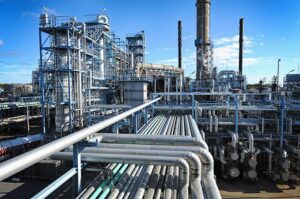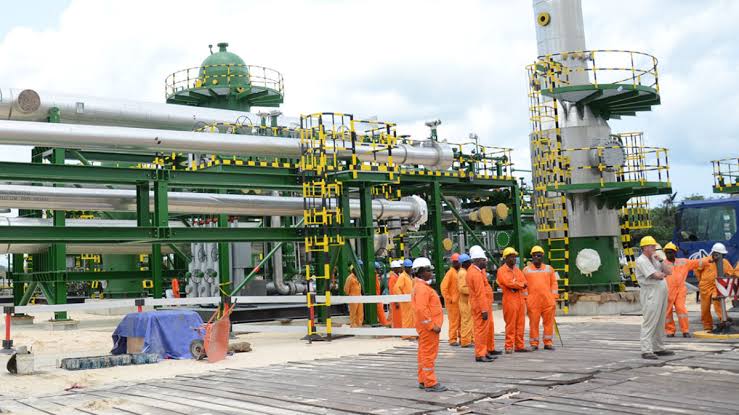
Nigerian indigenous oil companies are proving their strength, overtaking international firms in gas production, according to the latest report from the Nigerian National Petroleum Company Limited (NNPCL).
The report shows that Nigeria’s total gas output rose by 4.72% in July 2025, reaching 194.179 billion standard cubic feet (SCF), up from 185.432 billion SCF in June. This increase translated to an average daily output of 6.264 billion SCF, compared with 6.181 billion SCF per day the previous month.
Renaissance Africa Energy led the charge with 60.966 billion SCF of gas produced, followed by Seplat Energy Producing Nigeria Unlimited (SEPNU) at 27.576 billion SCF. Chevron Nigeria and TotalEnergies recorded 22.579 billion SCF and 17.819 billion SCF, respectively. Other key contributors included Star Deep Water, TotalEnergies Upstream, and Esso Exploration and Production Nigeria Limited, producing between 9.962 and 13.441 billion SCF each.
Despite the growth, the report highlighted ongoing challenges with gas flaring. NEPL and its joint venture with Seplat flared 100% of their gas output, while NEPL alone flared 98% of production from Oil Mining Leases 86 and 88. Enageed Resources and Seplat flared 92.71% and 85% of their production, respectively.
Regarding gas types, Associated Gas (AG) made up 58.73% of output at 114.045 billion SCF, while Non-Associated Gas (NAG) accounted for 41.27% at 80.134 billion SCF.
Utilisation of the country’s gas also grew. A total of 182.462 billion SCF of gas was consumed in July, a 4.24% increase from June. Nigeria Liquefied Natural Gas (NLNG) accounted for 42.34% of consumption, Escravos Gas-to-Liquids (EGTL) used 4.41%, and Natural Gas Liquid (NGL)/Liquefied Petroleum Gas (LPG) consumed 1.2%. Domestic sales made up 13.66% of production, while 27.53% was re-injected for gas lift operations. Gas flared during the month rose to 11.636 billion SCF, representing 5.99% of total production.
The report underscores the rising influence of local firms in Nigeria’s energy sector, demonstrating their ability to compete with multinational companies and drive the nation’s gas production forward.