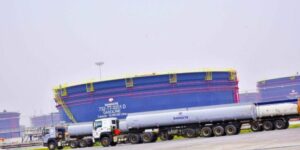
Nigerians could spend close to ₦1 trillion more on petrol each year following the Federal Government’s decision to introduce a 15 per cent import tariff on Premium Motor Spirit (PMS). The move, which takes effect later this month, has triggered mixed reactions across the oil and gas sector.
Data from the Nigerian Midstream and Downstream Petroleum Regulatory Authority shows that the country imported an average of 26.75 million litres of petrol daily between January and September 2025. Based on government projections, the 15 per cent tariff translates to an additional ₦99.72 per litre—about ₦2.67 billion daily or ₦973.6 billion annually in extra costs that will eventually be passed on to consumers.
The policy, approved by President Bola Tinubu and communicated through his private secretary, Damilotun Aderemi, followed a proposal from the Federal Inland Revenue Service (FIRS) chairman, Zacch Adedeji. The government says the tariff is part of broader fiscal and energy reforms aimed at strengthening the naira, promoting local refining, and stabilising fuel prices.
Adedeji argued that the duty is a corrective measure to align import prices with local refining costs and to protect emerging domestic refineries from cheaper duty-free imports. He stressed that the policy is not primarily designed to raise revenue but to create fair competition and reduce dependence on imported fuels.
However, several stakeholders have voiced concerns about the potential impact on consumers and inflation.
The Independent Petroleum Marketers Association of Nigeria (IPMAN) said the decision undermines market deregulation. The group’s publicity secretary, Chinedu Ukadike, warned that imposing import duties contradicts the principle of a free market and could discourage private importers.
Ukadike advised the government to focus on supporting local refineries by supplying crude oil at reduced costs instead of penalising importers. He cautioned that the tariff might worsen inflation and strain Nigerians already struggling with high fuel prices.
Energy analyst Jeremiah Olatide described the policy as a “double-edged sword” — beneficial for government revenue but painful for citizens. He noted that while the measure could help boost earnings, it comes at a difficult time when petrol prices hover around ₦800–₦900 per litre. “The timing is poor,” he said. “Nigerians are still adjusting to the removal of fuel subsidy, and this will only make life harder.”
Olatide added that the tariff, coupled with a proposed five per cent surcharge, could push up transportation costs and worsen the inflationary trend. He urged the government to explore other ways of supporting local refineries, such as adopting a naira-for-crude model and ensuring consistent upstream production.
Meanwhile, the Petroleum Products Retail Outlets Owners Association of Nigeria (PETROAN) described the policy as a “bold but risky” step toward protecting domestic refineries. The group warned that without careful implementation, the tariff could discourage importers and lead to fuel scarcity during the festive season.
On the other hand, the Centre for the Promotion of Private Enterprise (CPPE) threw its support behind the policy, calling it a “strategic protectionist measure” to rebuild Nigeria’s refining capacity. The organisation said similar approaches had revived industries like cement and beverages, arguing that moderate protectionism can help local producers become globally competitive.
The CPPE, however, urged the government to complement the tariff with incentives such as low-interest financing, infrastructure upgrades, and regulatory reforms to ensure that consumers eventually benefit from price stability and improved supply.