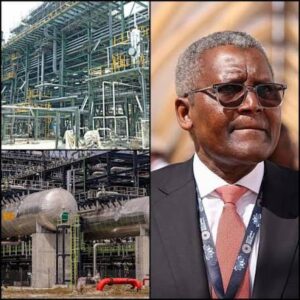
Nigeria’s crude oil production increased slightly in January 2026, reaching 1.459 million barrels per day (bpd), according to the latest report from the Organisation of Petroleum Exporting Countries (OPEC).
The growth, modest but steady, reinforces Nigeria’s position as Africa’s leading oil producer, even as the country continues to fall short of its OPEC production quota.
The figures, released in OPEC’s Monthly Oil Market Report (MOMR), show a month-on-month increase of 37,000 bpd from December 2025, when production stood at 1.422 million bpd.
Despite the rise, Nigeria’s output remains about 50,000 bpd below its OPEC-assigned quota of 1.5 million bpd. Secondary estimates cited by OPEC put Nigeria’s production slightly higher at 1.47 million bpd.
Libya followed as the continent’s second-largest producer, with 1.37 million bpd during the same period. Analysts note that discrepancies between direct reporting and secondary estimates are common due to differing tracking methods used by OPEC.
Nigeria has struggled to meet its OPEC quota consistently over the past year. Factors including pipeline vandalism, oil theft, and underinvestment in upstream infrastructure have constrained production.
The country has now recorded six consecutive months below its target, with July 2025 marking the last time it met its quota. Operational issues and maintenance challenges have further affected output.
Despite these hurdles, the gradual recovery in production is seen as a positive sign. Experts stress that addressing structural weaknesses and improving security measures in the Niger Delta will be crucial for sustaining growth and narrowing the gap between actual output and quota.
On a broader scale, OPEC reported that total crude production among Declaration of Cooperation (DoC) countries fell to 42.45 million bpd in January, down 439,000 bpd from December. This decline aligns with coordinated production management efforts aimed at stabilizing global oil markets amid uncertain demand and economic conditions.
Oil production remains vital to Nigeria’s economic stability. Crude exports account for the majority of foreign exchange earnings and a significant portion of government revenue. Analysts expect that steady improvements in output could support fiscal performance, strengthen external reserves, and ease budgetary pressures.
While the federal government has set an ambitious 2.6 million bpd production benchmark for 2026, budget planning is based on a more conservative 1.8 million bpd.