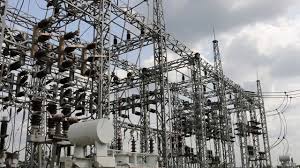
The Federal Government’s outstanding debt to electricity generation companies (GenCos) has surged to N1.05 trillion within the first six months of 2025, as the country continues to struggle with power subsidy payments and non-cost-reflective tariffs.
According to the Nigerian Electricity Regulatory Commission (NERC) Second Quarter 2025 report, the government incurred a subsidy obligation of N536.4 billion in the first quarter and N514.35 billion in the second quarter, bringing the total to over one trillion naira.
NERC explained that the government’s rising debt is caused by its continued intervention to bridge the gap between the actual cost of power generation and what electricity consumers are charged. The regulator said this is necessary because tariffs are not yet fully cost-reflective.
Under the DisCo Remittance Obligation (DRO) framework—introduced in 2024 to replace the old remittance system—the Nigerian Bulk Electricity Trading (NBET) company handles payments to GenCos on behalf of distribution companies (DisCos). This system was designed to prevent unpaid subsidy debts from affecting the financial health of DisCos.
During the second quarter, GenCos billed N863.02 billion for electricity supplied to DisCos. After adjustments, NBET invoiced N348.66 billion, out of which DisCos remitted N333.9 billion, showing a 95.77 percent payment performance. However, Jos and Kaduna DisCos underperformed, with 60.85 percent and 41.84 percent remittance rates respectively.
NERC also warned that the open-ended nature of Nigeria’s subsidy regime exposes the government to unpredictable financial risks due to changes in power generation levels and costs.
To tackle the mounting debt, President Bola Tinubu recently approved a N4 trillion bond to clear outstanding payments owed to GenCos. The Minister of Power, Adebayo Adelabu, confirmed the approval, but GenCos say they are yet to be informed about how the funds will be shared among them.
Industry experts warn that unless Nigeria adopts cost-reflective tariffs, the continuous rise in subsidies and government debt could threaten investment and sustainability in the power sector.