NNPC Limited reported a profit after tax of ₦276 billion for March 2026, marking a sharp rise from the previous month as stronger gas production and operational gains lifted performance despite pipeline setbacks.
According to the company’s latest monthly operational report, revenue climbed to ₦2.77 trillion in March, reflecting a 3.51 per cent increase compared to February. Crude oil and condensate output stood at 1.56 million barrels per day, unchanged from February but higher than January’s figures.
Gas production delivered the most notable improvement. Output surged to 7,731 million standard cubic feet per day, the highest level recorded within the past 12 months. The steady rise in gas volumes throughout the first quarter underscores its growing importance in the company’s performance and Nigeria’s broader energy mix.
The company linked the improved output to better asset management, particularly offshore operations. Early completion of maintenance work at the Bonga field under Oil Mining Lease 118 was cited as a key factor, with the exercise concluded nearly two weeks ahead of schedule.
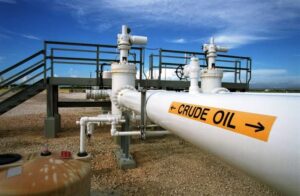
However, operations were not without disruption. A leak along the Trans Forcados Pipeline at the Keremor axis led to production curtailments across several assets between February 20 and March 25, affecting evacuation and output levels during the period.
Despite the challenges, the firm said it has intensified recovery efforts aimed at stabilising production, improving asset reliability and addressing evacuation constraints.
Crude oil sales fell noticeably in March to 17.37 million barrels, compared to 22.85 million barrels in February and 25.75 million barrels in January, indicating lingering logistics and infrastructure issues. In contrast, gas sales rose to 5,059 mmscf/d, reinforcing the expanding role of gas in revenue generation.
Month-on-month, profit after tax jumped by about 103 per cent, highlighting the financial impact of improved production efficiency and gas performance. Between January and March, the company said it remitted ₦2.89 trillion to the Federation Account as statutory payments.
On infrastructure, progress was reported on major gas pipeline projects. Work on the Ajaokuta-Kaduna-Kano pipeline advanced with the completion of welding on a spur line linking the Gwagwalada Independent Power Plant, while drilling activities continued on the Obiafu-Obrikom-Oben River Niger crossing segment.
Downstream performance remained mixed, as petrol availability across the company’s retail outlets nationwide was estimated at 56 per cent during the month.
The company noted that all operational and financial figures remain provisional pending reconciliation with relevant stakeholders.
March’s performance signals gradual recovery in Nigeria’s oil and gas sector, driven largely by rising gas output and improved operational execution, even as infrastructure and evacuation constraints continue to test sustainability.