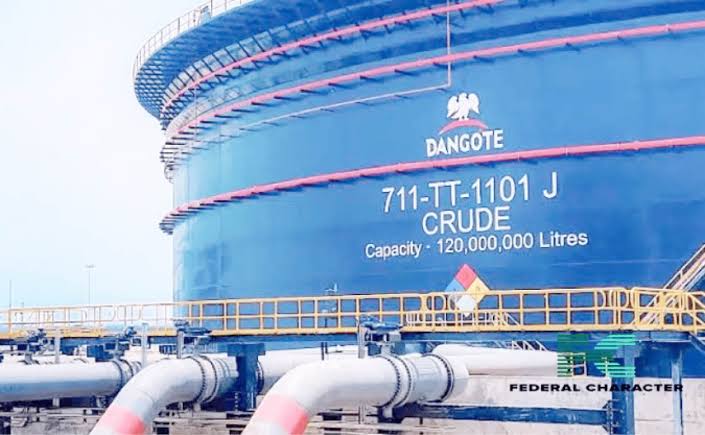
President of the Dangote Group, Aliko Dangote, has revealed that the Nigerian National Petroleum Company Limited (NNPC Ltd) could acquire a larger stake in the Dangote Refinery once the facility has fully demonstrated its capacity.
Speaking in an interview with S&P Global Commodity Insights, Dangote said the door remains open for NNPC to expand beyond its current 7.2 percent ownership, but only after the refinery’s next growth phase is firmly established.
“I want to show what this refinery can achieve first. After that, we can have a discussion,” Dangote said.
He added that while the company remains open to strategic partnerships, any move to bring in additional investment from the NNPC will be handled cautiously.
According to Dangote, the company also plans to list between five and ten percent of its shares on the Nigerian Stock Exchange within a year, as part of efforts to broaden ownership and attract local and foreign investors. “We don’t intend to keep more than 65 to 70 percent of the shares,” he noted, explaining that the process would be gradual and dependent on investor interest and market conditions.
The NNPC had earlier reduced its initial 20 percent stake in the 650,000-barrel-per-day refinery to 7.2 percent. The company’s former spokesperson, Olufemi Soneye, explained in 2024 that the reduction allowed the national oil firm to redirect funds toward developing compressed natural gas (CNG) infrastructure nationwide.
Soneye said the move was part of NNPC’s shift toward cleaner and more affordable energy, noting that CNG offers Nigerians a cheaper alternative to petrol. “With about N10,000, motorists can fuel their cars and use them for up to two weeks,” he said at the time.
The NNPC’s new Group Chief Executive Officer, Bayo Ojulari, recently told Argus Media that the company remains interested in increasing its stake in the Dangote Refinery, signaling continued collaboration between both entities.
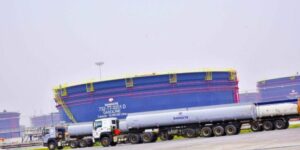
The Dangote Refinery — one of the world’s largest single-train refineries — began production earlier this year and is seen as a critical asset for achieving Nigeria’s energy security and reducing dependence on imported petroleum products.