Oando Plc recorded a pre-tax profit of N135.76 billion for the financial year ended December 31, 2025, despite a sharp decline in revenue and growing balance sheet pressures following the integration of newly acquired oil and gas assets.
According to the company’s audited financial statements filed with the Nigerian Exchange (NGX), revenue fell by 22.2 per cent to N3.18 trillion from N4.09 trillion recorded in 2024. Pre-tax profit also dropped by 64.6 per cent from N383.27 billion in the previous year.
The company, however, posted a profit after tax of N204.81 billion, supported by a tax credit of N69.05 billion, while earnings per share improved to 23 kobo from 18 kobo in 2024.
Oando’s cost of sales slightly exceeded revenue during the year, resulting in a gross loss of N2.76 billion compared with a gross profit of N93.34 billion recorded a year earlier. Operating profit also declined significantly to N240.96 billion as lower revenue and reduced other operating income weighed on earnings.
Finance costs increased to N394.69 billion, reflecting a higher debt burden, although finance income rose sharply to N288.03 billion, helping to moderate the impact on the company’s bottom line.
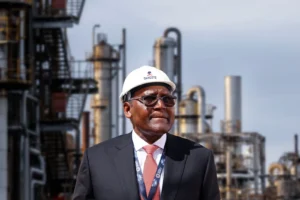
Group Chief Executive Wale Tinubu described 2025 as a defining year for the company, noting that it marked the first full year of operations after the acquisition of the Nigerian Agip Oil Company (NAOC) Joint Venture assets.
He said the company had successfully completed the integration of the acquired assets and shifted its attention to improving operational performance and unlocking value from its expanded portfolio. Tinubu also highlighted the completion of the Obiafu-44 well as evidence of the capability of indigenous operators to execute complex oil and gas projects.
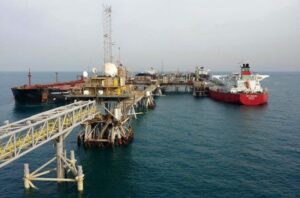
Operationally, Oando achieved average production of 32,482 barrels of oil equivalent per day (boepd), representing a 32 per cent increase from the previous year. The growth was driven by higher crude oil, gas and natural gas liquids production, supported by the full-year contribution of the acquired NAOC assets.
On the balance sheet, total assets rose to N7.45 trillion, aided by stronger cash holdings and a significant increase in trade and other receivables. Cash and cash equivalents nearly doubled to N439.88 billion during the year.
However, total liabilities climbed to N8.01 trillion, leaving the company with negative shareholders’ equity of N566.97 billion. Oando also ended the year with a working capital deficit of N3.76 trillion, indicating that its short-term obligations exceeded its current assets.
The company invested approximately $36.9 million in field development, infrastructure upgrades and exploration activities as it continued to expand its upstream operations.
While production growth strengthened Oando’s operational outlook, the company’s financial performance reflected the impact of lower revenue, weaker operating income and rising financing costs. Management expects the enlarged asset base to provide stronger earnings opportunities as the benefits of recent acquisitions continue to materialise.