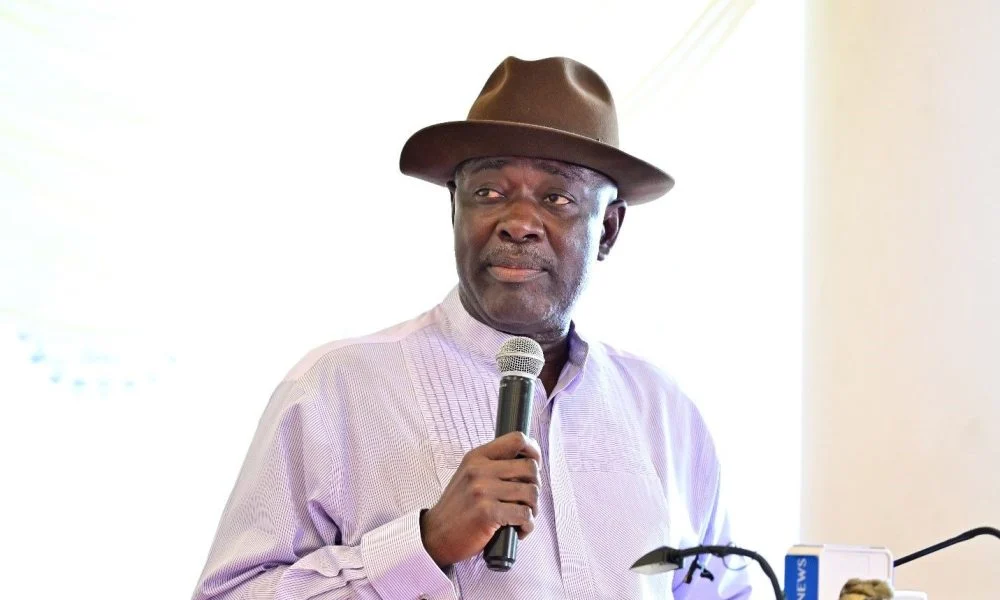
Minister of State for Petroleum Resources (Oil), Heineken Lokpobiri, has urged oil and gas companies to shorten the time they take to reach Final Investment Decisions on projects in Nigeria.
Lokpobiri made the call in Abuja during the signing of the Final Investment Decision for the $800 million Ima Gas Project, being developed by AMNI International and TotalEnergies.
The minister said lengthy delays between the discovery of oil and gas resources and the approval of projects for development were slowing Nigeria’s ability to turn its reserves into production and economic value.
The Ima field, discovered in 1973, is located offshore near Bonny Island in Rivers State and is covered by Oil Mining Leases 112 and 117. After more than five decades, the project is expected to begin production in 2028.
TotalEnergies operates the project with a 40 per cent interest. Production is expected to reach about 350 million standard cubic feet of gas per day at peak capacity, with roughly one-third of the gas earmarked to support the expansion of the Nigeria Liquefied Natural Gas Train 7 project.
Lokpobiri noted that more than two years passed between the initial agreement and the final investment decision on the Ima project, describing the timeline as one that should be shortened for future developments.
He encouraged oil companies to move faster from project discussions to investment commitments, noting that some operators were already targeting much shorter timelines for reaching FIDs.
The minister also called on Nigerian banks to increase financing for oil and gas developments, stressing the need for stronger local participation in funding projects across the sector.
Minister of State for Petroleum Resources (Gas), Ekperikpe Ekpo, said the Ima project demonstrated growing confidence in Nigeria’s gas industry and supported the government’s efforts under its Decade of Gas initiative.
Special Adviser to the President on Energy, Olu Verheijen, said Nigeria could gain greater economic value from its natural resources when investments translate into production, jobs and government revenue.
TotalEnergies said the Ima development would use a single offshore platform connected to the NLNG facility through a 22-kilometre pipeline. The project is also expected to use shore-based power, eliminate routine gas flaring and include permanent methane monitoring.
About 60 per cent of the project’s development workforce is expected to come from communities in the host areas.