Oil prices have plunged to their lowest levels since March 2021, marking the steepest monthly drop in nearly four years.
The downturn, fueled by Saudi Arabia’s signal to expand output and reclaim market share, has rattled global markets and put Nigeria’s oil-dependent budget under pressure.
Brent crude futures, Nigeria’s benchmark, closed at $61.86 per barrel, while the US West Texas Intermediate (WTI) dropped to $58.21. These figures represent a sharp contrast to the $75 price level earlier this year and significantly undercut Nigeria’s 2025 budget benchmark of $75 per barrel.
“This dramatic shift has caught many traders off-guard,” a market analyst noted, especially with prior expectations of supply disruptions due to Middle East tensions.
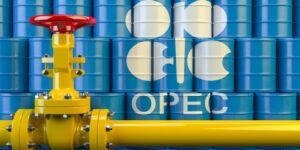
The Organization of the Petroleum Exporting Countries and its allies (OPEC+) are set to meet on May 5 to deliberate on output strategies, following Saudi Arabia’s push for an output hike in May and discussions of a further increase in June.
Nigeria faces a double blow as domestic crude oil production continues to fall—declining from 1.495 million barrels per day in January to 1.465 million in February, with further dips in March.
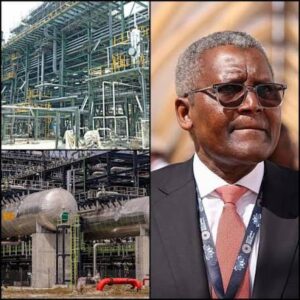
With oil contributing over half of government revenues, the fiscal strain is mounting.In response, the federal government said it recognizes the need to “reassess its budget framework and revenue strategies.”Meanwhile, Nigerian billionaire Aliko Dangote said he was “comfortable” with the impact of former US President Donald Trump’s new tariffs on Nigerian urea exports, due to a higher tariff slapped on a key competitor.
Trump imposed a 14% tariff on Nigerian urea imports, a move Dangote initially feared. But, as he explained during an investment conference in Lagos, “When I checked who we are really competing with, we are competing with Algeria. So luckily for us, Algeria were slapped with 30 per cent. So it actually makes us a bit comfortable.”
Dangote Fertiliser, which began commercial production in 2022, currently ships 37% of its 3 million metric tonnes of annual urea output to the US.Dangote also expressed confidence in his group’s outlook, projecting revenue growth from $25 billion in 2025 to over $30 billion next year.
He added, “We are very optimistic about the future. With the refinery, fertiliser and cement businesses, we are well positioned to grow.”