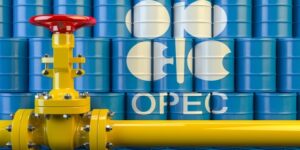

The Organisation of the Petroleum Exporting Countries and its allies (OPEC+) has decided to maintain existing oil production targets for December as ongoing conflict in the Middle East continues to disrupt crude supply from some member countries.
The decision was reached on Sunday during a virtual meeting of seven key OPEC+ members led by Saudi Arabia and Russia, according to a statement released after the discussions.
The move follows the group’s earlier decision to suspend further production increases towards the end of 2026, after implementing a series of modest output adjustments between March and August.
The production policy comes amid uncertainty in global oil markets, with crude prices climbing to $118 per barrel in London last week as traders assessed the possibility of renewed hostilities in the Middle East.
However, the recovery of crude shipments through the Strait of Hormuz to levels close to those recorded before the conflict has raised questions about the strength of physical oil demand. Prices for actual crude cargoes have also weakened despite the recent rally in futures markets.
OPEC+ had previously introduced gradual production increases over six months, which were largely offset by supply disruptions caused by the conflict involving Iran and other Middle Eastern developments.
The adjustments were intended to reverse production cuts introduced in 2023 and could provide Gulf producers with additional capacity to increase supply once regional disruptions ease.
Attention is now shifting to the group’s next major production decision, which will involve determining whether to restore another portion of the output reductions introduced in 2022.
The decision is expected to depend partly on an ongoing assessment of members’ maximum production capacities, which could influence how future quotas are distributed.
OPEC+ is scheduled to hold a full ministerial meeting on November 29, where members are expected to establish production policy for 2027.