The House of Representatives has ordered a probe into the $18 billion reportedly spent over the past 20 years on rehabilitating Nigeria’s refineries in Port Harcourt, Warri, and Kaduna, which remain idle despite the huge investment.
The decision followed a motion raised by Oluwaseun Whinghan, representing Badagry Federal Constituency of Lagos State, during Thursday’s plenary session presided over by Deputy Speaker Benjamin Kalu.
Whinghan said the House was concerned that despite several turnaround maintenance projects and heavy funding by successive administrations since the early 2000s, the refineries had yet to produce any meaningful results.
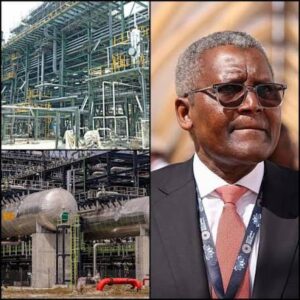
He added that recent statements by business mogul Aliko Dangote and former President Olusegun Obasanjo, who both expressed doubts about the viability of reviving the refineries, had deepened public anger over possible mismanagement of funds.
The lawmaker also reminded the House that in 2007, the refineries were sold to a consortium led by Dangote during the Obasanjo administration, but the deal was later reversed by President Umaru Musa Yar’Adua, who chose to retain government control — a move that has yielded no visible improvement.
Whinghan further cited comments from NNPCL Group Chief Executive Officer, Bayo Ojulari, who acknowledged that the facilities were still non-functional despite substantial investments and hinted that the government might consider selling them to stop further losses.
He warned that the continued failure of the refineries has undermined public confidence, especially following the fuel subsidy removal, which increased the urgency for Nigeria to refine its own petroleum products.
The House subsequently mandated its Committees on Petroleum Resources (Upstream, Downstream, and Midstream), Gas Resources, and Public Assets to investigate how the funds allocated between 2010 and 2024 were spent. The committees are to verify the refineries’ true state, expose any irregularities, and propose measures to prevent future waste.
They are expected to present their findings within four weeks for further legislative action.
Lawmakers emphasized that transparency and accountability in the management of the refineries are vital to restoring public trust, strengthening energy security, and reducing Nigeria’s reliance on imported fuel.