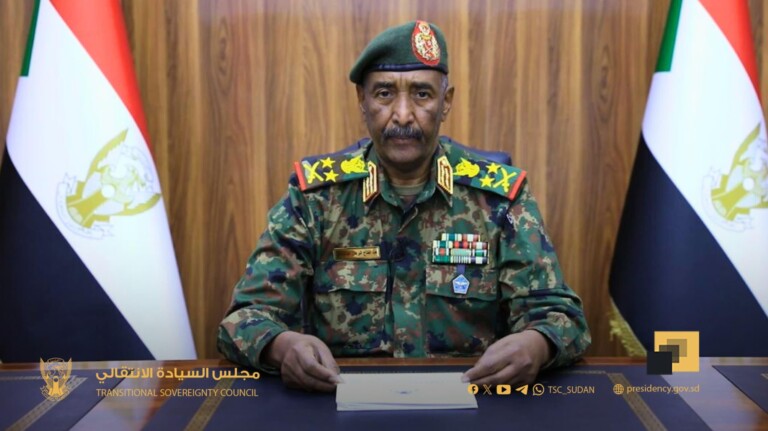
Sudan’s transitional government has announced the formation of a national investigative committee in response to U.S. sanctions over allegations that the Sudanese Armed Forces (SAF) used chemical weapons during the country’s ongoing war.
The decision was declared by Lt Gen Abdelfattah El Burhan, Head of the Transitional Sovereignty Council and Commander-in-Chief of the SAF, following U.S. claims that Sudan violated the Chemical Weapons Convention with chlorine gas attacks in 2024.
In a statement released Thursday, the Ministry of Foreign Affairs said the committee will include officials from the ministries of Foreign Affairs, Defence, and the General Intelligence Service. It has been tasked with delivering its findings “immediately.”
The ministry described the U.S. accusations as “baseless,” and stressed that Sudan “reaffirms its commitment to international treaties and conventions, including the Convention on the Prohibition of Chemical Weapons.”
Minister of Culture and Information Khaled Aleiser also condemned the U.S. move, calling it “political blackmail and falsification of the facts not based on evidence.”Opposition voices have called for a broader and more impartial investigation. Former Prime Minister Abdalla Hamdok’s Sumoud coalition demanded “an independent international committee to investigate all crimes and violations committed during the war.”
SPLM-RDC leader Yasser Arman supported targeted sanctions against individuals and institutions rather than the entire state. Darfur Governor Minni Arko Minawi urged a “credible investigation into the chemical weapons allegations.”
The SPLM-North, led by Abdelaziz El Hilu and part of the Sudan Founding Alliance (Tasees), accused the SAF of using banned agents, including mustard gas and lewisite, in civilian areas.
The group cited lab tests, eyewitness reports, and photographic evidence allegedly showing chemical clouds over Jebel Moya, Karari, East Nile, and Dinder. Confidential medical reports, the SPLM-N claimed, revealed symptoms consistent with chemical exposure: “internal burns, lung corrosion, and slow death caused by internal asphyxiation.”
“This confirms what we’ve long warned of,” Tasees said in a statement, calling for increased international pressure on SAF leaders who “continue to reject peace efforts.”Meanwhile, supporters of the Rapid Support Forces (RSF) rallied in Nyala, South Darfur, in favor of the U.S. sanctions.
Calling the move “a major step forward,” the RSF repeated its own accusations against the SAF, citing tests and reports that point to chemical agents being used in conflict areas such as Mellit, El Koma, and Khartoum.