Efforts to revise oil export fees between Sudan and South Sudan have reached a standstill, raising concerns over the future of South Sudan’s oil-dependent economy.
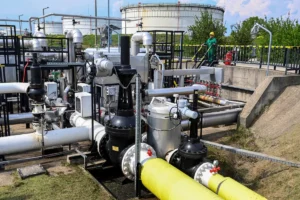
Reports from local sources indicate that Sudan’s proposed changes to the transit charges could significantly hurt South Sudan, which heavily relies on oil exports for national revenue. Since its independence in 2011, the landlocked country has been using Sudan’s pipelines to move crude oil to Port Sudan on the Red Sea — a setup that leaves it vulnerable to political and logistical disruptions.
Although oil exports resumed earlier this year after a near year-long shutdown due to conflict in Sudan, previous pipeline damage and repeated declarations of force majeure have continued to disrupt the flow of oil.
In response to these challenges, South Sudan is looking to reduce its reliance on Sudan. Talks with the China National Petroleum Corporation (CNPC) are ongoing regarding the construction of a new pipeline that would run through Djibouti. This project is part of a broader strategy to stabilize the country’s oil sector and open up new export routes.
Additionally, the government has reached a preliminary agreement with Russian firm Rosneft to build oil infrastructure inside South Sudan. The deal, revealed at the Saint Petersburg International Economic Forum, includes plans for refineries and new pipelines aimed at boosting domestic processing and reducing external dependency.
Kamal Mabok, a top technical advisor at Nile Petroleum Corporation (NilePet), confirmed that the agreement is nearing completion, stressing its importance in strengthening the country’s energy future.
With these new partnerships, South Sudan is positioning itself to be less reliant on Sudan and more integrated into global energy networks. However, until a new route becomes operational, unresolved fee talks with Sudan continue to threaten the country’s economic stability.