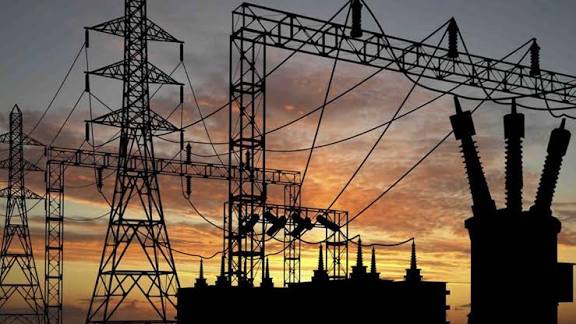
The Transmission Company of Nigeria (TCN) says it has significantly expanded the country’s electricity transmission capacity over the last ten years, recording a 38% increase in available wheeling capacity.
Officials disclosed the progress during a meeting with energy journalists in Abuja, where they highlighted upgrades supported by international partners, including the World Bank.
According to the Transmission Service Provider, Oluwagbenga Ajiboye, the national grid’s wheeling capacity has grown from 5,000 megawatts in 2015 to about 8,100 megawatts today. He attributed the improvement to major investments, new substations, transformer installations, and ongoing grid expansion projects across the country.
Ajiboye explained that TCN has completed more than 30 transmission projects nationwide, adding over 2,000MW of transfer capability to the grid through new lines and substations. Within the same period, the company energized 24 power transformers, increasing grid capacity by more than 2,500MW, while three additional transformers are currently being installed in separate substations.
He noted that TCN has strengthened its inventory, taking delivery of 16 new transformers to further support grid upgrades. Several large-scale projects in the Abuja transmission ring, including substations in Apo, Wumba-Lokogoma, Lugbe West, and Kuje, are nearing completion at about 90%.
Ajiboye also confirmed that TCN is deploying a new Supervisory Control and Data Acquisition (SCADA) system to improve real-time grid monitoring, reduce power disruptions, and enhance overall grid management.
On workforce development, he said more than 1,000 technical staff have undergone training in the last two years to support the evolving needs of Nigeria’s electricity transmission system.
He added that Nigeria has improved cross-border connections with neighbouring countries through the West African Power Pool, recently completing a test run to synchronize Nigeria’s grid with those of other member states.
Ajiboye credited the steady progress to initiatives championed under the leadership of TCN’s Managing Director, Sule Ahmed Abdulaziz, including the Nigerian Electricity Grid Maintenance, Expansion and Rehabilitation Program (NEGMERP). He said the reforms have helped modernize grid operations, improve transformer capacity, re-conductor aging lines, and strengthen grid stability.
He also revealed that Nigeria recorded several generation peaks in recent years, including a historic high of 5,802MW. Notably, between July 2022 and September 2023, the national grid operated for 421 consecutive days without a system collapse — one of the longest periods of grid stability in recent history.
Ajiboye noted that TCN has
also embraced digital innovation, developing in-house solutions based on Internet of Things (IoT) technology to collect real-time data from power plants and substations. This, he said, has dramatically improved visibility for grid controllers, helping them make quicker and more informed decisions.