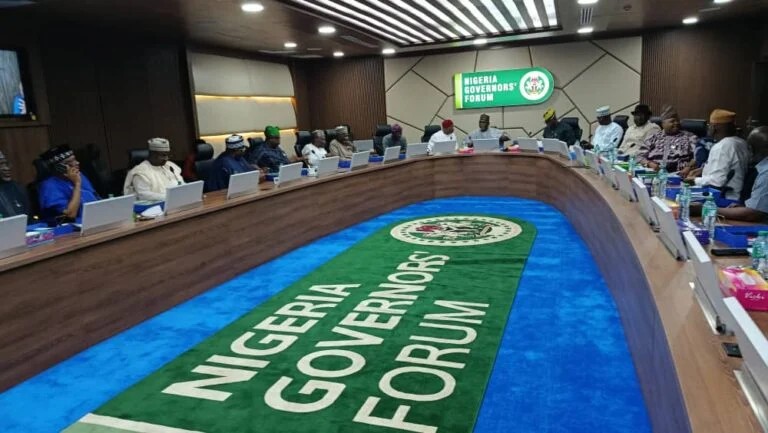
A renewed standoff has emerged between the Nigerian National Petroleum Company Limited (NNPCL) and Periscope Consulting, the audit firm engaged by the Nigeria Governors’ Forum (NGF), over allegations that the oil company failed to remit $42.37 billion (around N12.91 trillion) to the Federation Account between 2011 and 2017.
The disagreement, reignited by recent submissions from both parties, has prompted the Federation Account Allocation Committee (FAAC) to call for a joint reconciliation meeting to resolve the dispute and clarify the actual status of oil revenue remittances.
According to FAAC’s post-mortem review for November 2025, NNPCL has formally rejected the audit findings, insisting that all crude oil proceeds and associated revenues were fully accounted for. The company disputed Periscope Consulting’s claims of a significant shortfall, arguing that no funds are outstanding for the period under review.
Periscope Consulting, however, maintained that its audit uncovered substantial gaps in NNPCL’s remittances and that the alleged $42.37 billion discrepancy remains unresolved. FAAC has therefore directed both sides to meet jointly to reconcile records and “close out” the matter, noting that the process is ongoing.
This dispute is part of a long-standing tension between state governments and the national oil company over revenue transparency. In February 2025, FAAC suspended its monthly meetings due to disagreements over outstanding remittances, highlighting the potential impact on state allocations.
Experts say the controversy reflects systemic weaknesses in Nigeria’s pre–Petroleum Industry Act (PIA) framework. Professor Emeritus Wumi Iledare described the shortfall as a “legacy problem,” citing overlapping roles and weak revenue monitoring under the old NNPC structure. He stressed that full PIA implementation, real-time monitoring, and continuous independent audits are crucial to prevent future disputes.
FAAC’s review also highlighted gaps in NNPCL’s reporting on the Frontier Exploration Fund, a statutory 30% deduction used for oil and gas exploration in frontier basins. While NNPCL submitted records covering 2008 to 2024, the sub-committee noted the absence of project-specific expenditure details and requested a reconciliation linking each project to the funds spent.
Additionally, NNPCL’s outstanding liabilities to the Federal Inland Revenue Service and the Nigerian Upstream Petroleum Regulatory Commission from June to December 2023, totaling N2.03 trillion, are being addressed by the Stakeholders Alignment Committee, which is expected to finalize the report for the Ministry of Finance.
The World Bank has previously criticized NNPCL for not fully remitting oil revenues, warning that incomplete transfers undermine fiscal transparency and economic stability. While the company was corporatized in 2021, it still controls crude sales and foreign exchange inflows, contributing to persistent gaps between reported and actual remittances.
NNPCL’s CEO, Bayo Ojulari, has repeatedly pledged to maintain transparency and accountability in the company’s operations. Yet, legacy issues, including allegations of tens of billions of dollars in unremitted revenues, continue to challenge efforts to demonstrate full compliance.