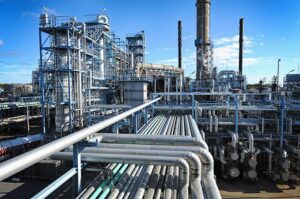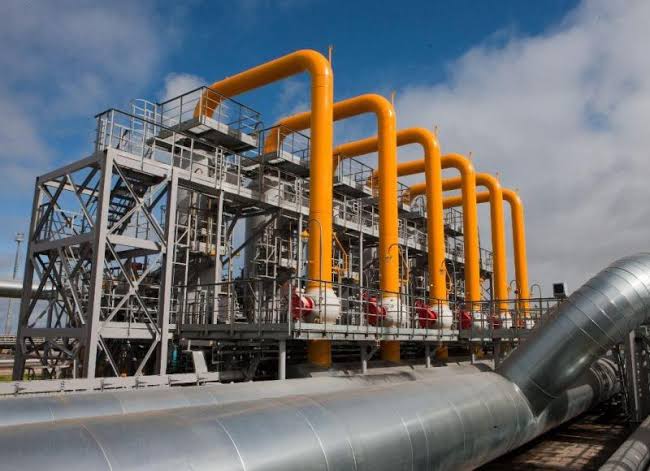
While massive oil tankers often steal the spotlight, it’s the network of underground and underwater pipelines that truly fuels the global economy. These vast conduits quietly transport billions of barrels of oil and trillions of cubic meters of natural gas each year, shaping energy flows, geopolitical alliances, and trade balances across continents.
Here are nine of the most important oil and gas pipelines in the world today:
- Druzhba Pipeline (Russia to Central Europe)
Once the world’s longest oil pipeline, the Druzhba—Russian for “friendship”—spans over 4,000 kilometers and delivered up to 1.4 million barrels per day (bpd) across Eastern and Central Europe. However, recent sanctions, geopolitical tensions, and reduced supply have weakened its influence, leaving its future uncertain. - Eastern Siberia–Pacific Ocean (ESPO) Pipeline
Running nearly 4,900 kilometers from Taishet in Eastern Siberia to Russia’s Pacific coast, the ESPO pipeline transports about 1 million bpd, with a key branch into China. Its strategic importance continues to grow as Russia pivots toward Asian markets. - Nord Stream 1 & 2 (Russia to Germany)
These twin gas pipelines beneath the Baltic Sea once supplied Germany with 110 billion cubic meters of gas annually. Both pipelines were severely damaged by explosions in 2022 and remain out of service, underscoring Europe’s fragile energy relationship with Russia. - Keystone Pipeline (Canada to the U.S.)
Transporting roughly 590,000 bpd from Alberta to U.S. refineries, the Keystone pipeline has become a vital link for North American energy. The controversial Keystone XL extension, which was cancelled, would have doubled its capacity. - Baku–Tbilisi–Ceyhan (BTC) Pipeline
Stretching 1,768 kilometers from the Caspian Sea through Azerbaijan, Georgia, and Turkey, the BTC pipeline exports up to 600,000 bpd to the Mediterranean. It bypasses Russia and Iran, offering a crucial export route for Central Asian oil. - Trans-Anatolian Natural Gas Pipeline (TANAP)
Part of the Southern Gas Corridor, TANAP carries Azerbaijani gas across Turkey into Europe. With a current capacity of 16 billion cubic meters per year, it is seen as a strategic alternative to Russian gas. - Kirkuk–Ceyhan (Iraq to Turkey) Pipeline
Iraq’s main export line to Turkey has been offline for over two years following legal disputes. It once moved up to 600,000 bpd and has capacity for more than twice that. Talks are ongoing to restart the flow after a $1.5 billion court ruling favored Iraq.
8. Trans Mountain Pipeline (Canada)
Recently expanded, this pipeline now carries up to 890,000 bpd from Alberta to British Columbia’s coast, giving Canadian crude greater access to Asian markets. Despite high toll costs, it’s a cornerstone of Canada’s oil export strategy.
- China–Myanmar Oil & Gas Pipelines
These twin pipelines run about 800 kilometers and offer China a strategic bypass to the congested Strait of Malacca. They carry around 440,000 bpd of oil and 12 billion cubic meters of natural gas annually, reinforcing Beijing’s energy security.
Why Pipelines Matter
Pipelines remain the most efficient and reliable way to transport oil and gas. In the U.S. alone, they account for roughly 70% of petroleum deliveries—moving over 14 billion barrels annually with fewer disruptions than other methods.
Beyond logistics, pipelines are political tools. Routes like Nord Stream and TANAP can redefine alliances or fuel tensions. Others, like the ESPO or China–Myanmar pipelines, are part of broader strategic moves to reduce dependence on chokepoints or rival nations.