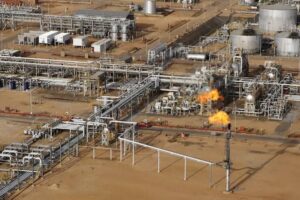

Nigeria has secured four Final Investment Decisions (FIDs) for gas projects in less than two years, while daily gas production has increased from about seven billion cubic feet to eight billion cubic feet, according to the Presidency.
Special Adviser to President Bola Tinubu on Energy, Olu Arowolo Verheijen, attributed the progress to reforms aimed at removing investment barriers and encouraging the development of Nigeria’s vast natural gas resources.
Speaking at the Africa Interviews Sustainability Forum 2026 in Lagos on Wednesday, Verheijen said the government was working to ensure that the country’s gas reserves translated into industrial growth, improved electricity supply and employment opportunities.
She identified the Ima gas project, which reached a Final Investment Decision about a month before the forum, as one of the investments recorded under the administration’s reform programme.
Nigeria has more than 200 trillion cubic feet of proven natural gas reserves. However, Verheijen stressed that possessing abundant resources was not enough without sustained investment and policies that gave investors confidence.
She said the administration was focused on creating a stable business environment that would encourage companies to commit funds to gas exploration, production and infrastructure development.
The presidential aide also highlighted measures introduced to encourage cleaner cooking, including import duty waivers and zero-rated value-added tax on liquefied petroleum gas (LPG) and gas cylinders.
She argued that a country with Nigeria’s gas potential should do more to help households move away from firewood to cleaner cooking alternatives.
On the electricity sector, Verheijen disclosed that the government had settled more than N100bn in outstanding gas debts since January 2026 under the Presidential Power Sector Financial Reforms Programme.
The payments form part of efforts to improve liquidity across the gas-to-power value chain, where unpaid debts have affected the ability of suppliers and operators to sustain operations.
Co-founder of the Africa Interviews Sustainability Forum, Sam Umukoro, said Africa’s economic future would depend on how effectively countries attracted investment, developed infrastructure and created value from their natural resources.
Other energy-sector stakeholders at the event called for stronger cooperation between government and private businesses to accelerate gas development and improve energy security.
Wandoo Ihyembe-Hassan, General Manager of Strategy, Corporate Planning and Non-Operated Ventures at Waltersmith Petroman Oil Limited, emphasised the need to make sustainability a central business priority, supported by transparency and practical skills development.
Oando Plc’s Executive Director and Chief Corporate Services and Sustainability Officer, Ayotola Jagun, called for a shift from gas planning to implementation and actual project delivery.
Meanwhile, Dr Trost Amos of Renaissance Africa Energy Company highlighted the developmental urgency of gas investment, while Lamé Verre, co-founder of Lean In Equity & Sustainability, noted that gas could support healthcare, clean cooking, access to clean water and electricity.
The government’s gas reforms are intended to attract more private investment, strengthen domestic energy supply and expand the contribution of natural gas to Nigeria’s economic development.