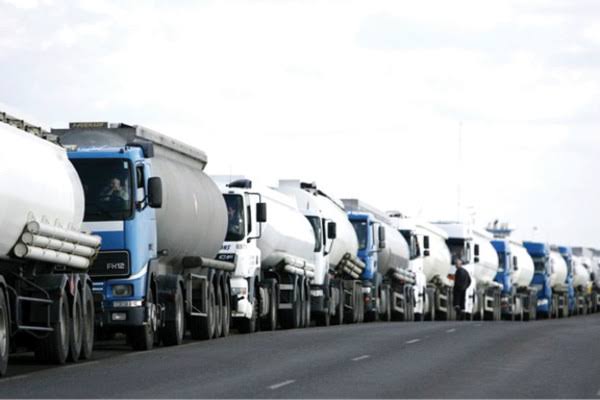
The National Union of Edible Oil Tanker Drivers of Nigeria (NUEOTDN) has raised concerns over the use of tankers previously deployed for petroleum products to transport edible oil, warning that the practice could expose consumers to food-safety risks.
The union also threatened possible industrial action if authorities fail to address what it described as encroachment into the operations of dedicated edible-oil tanker drivers.
In a statement, NUEOTDN President Ilias Aperun said petroleum products and food-grade oils require different transportation standards, particularly because residues from petroleum products could contaminate edible oil if tanks are not properly cleaned and converted for food use.
According to the union, any tanker being transferred from petroleum transportation to food-grade operations should undergo appropriate cleaning, inspection and certification before carrying edible oil.
NUEOTDN called on the Federal Government, the National Agency for Food and Drug Administration and Control (NAFDAC), the Federal Ministry of Health, the Federal Ministry of Labour and Employment and the Nigeria Labour Congress (NLC) to intervene in the matter.
The union’s concerns also extend to the jurisdictional dispute between operators in the petroleum tanker and edible-oil transportation sectors.
It alleged that the Petroleum Tanker Drivers branch of the Nigeria Union of Petroleum and Natural Gas Workers (NUPENG) and the Amalgamated Union of Wharf Truck Owners were interfering with the operations of edible-oil tanker drivers.
NUEOTDN said discussions had been held with relevant stakeholders under a conciliation process led by the Federal Ministry of Labour and Employment, including a meeting involving NUPENG officials and representatives of petroleum tanker drivers in Lagos.
However, the union said the September 1 meeting in Lagos failed to produce a resolution to the dispute.
Aperun maintained that members of NUEOTDN had invested in dedicated tankers and hygiene systems designed for the transportation of edible oil.
He added that the union’s drivers had undergone safe-loading training with the Federal Road Safety Corps and received safety and hygiene education from NAFDAC and the Lagos State Consumer Protection Agency.
The development comes against the backdrop of earlier regulatory efforts in Lagos to restrict the use of petroleum and hazardous-substance tankers for transporting edible oil. In May 2026, the Lagos State Consumer Protection Agency announced a framework aimed at preventing such practices and improving hygiene standards in the edible-oil transportation chain.
NUEOTDN is now calling for clearer boundaries between the different tanker operators and for authorities to enforce standards that protect consumers while recognising operators that have invested in dedicated food-grade transportation equipment.