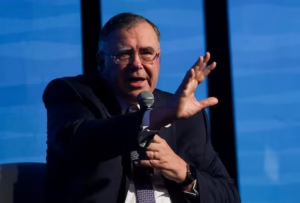
Despite Nigeria’s vast gas wealth, the nation still struggles to generate enough electricity for its citizens, a contradiction that Prof. Barth Nnaji, Chairman of Geometric Power and former Minister of Power, says is at the heart of Nigeria’s ongoing energy crisis.
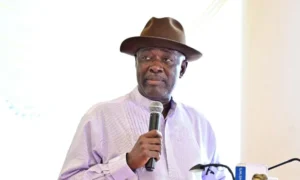
Speaking at the 2025 Orienta News Conference in Lagos, Nnaji blamed poor infrastructure, inconsistent gas pricing, and underinvestment for the country’s inability to translate its natural gas reserves—estimated at over 200 trillion cubic feet—into stable electricity for homes and industries.
“We have the gas, but we can’t seem to get the lights on,” he said, describing the situation as one of the most baffling failures in the nation’s energy sector.
Although the government recently adjusted the regulated price of domestic gas for power generation to $2.13 per million British thermal units (MMBtu), Nnaji noted that many generation companies (GenCos) are still forced to buy gas at $2.70 or more on the open market due to shortages and weak supply agreements. This pricing gap, he warned, is pushing the power sector into deeper financial distress.
He revealed that the disparity is a major reason behind the over N1 trillion electricity subsidy recorded in the first half of 2025, and the mounting debts owed to GenCos by the Federal Government.
“The current tariff structure does not support cost recovery for GenCos,” Nnaji said. “When you consider that most of their critical inputs are imported and priced in dollars, it becomes impossible for them to operate sustainably.”
He also criticized Nigeria’s slow pace in building gas infrastructure, saying the lack of investment in pipelines and storage facilities is hindering supply to power plants. He called for greater private sector involvement and urged the government to focus more on enabling policies than direct control.
“Without a reliable gas supply network, even our push toward compressed natural gas (CNG) and other clean energy options won’t succeed,” he said.
Nnaji also raised concerns over the failure of enforceable Power Purchase Agreements (PPAs) and the recurring issues of vandalism, pipeline sabotage, and contract disputes that affect both gas producers and power firms.
On the long-term energy outlook, he stated that while solar and hydro will play supporting roles, Nigeria’s energy future for the next 10 to 20 years will still depend heavily on gas-fired power plants.
“Hydro has potential but is limited by seasonal rainfall and political considerations, especially with upstream countries,” he explained.
He concluded by urging immediate and coordinated reforms, warning that unless Nigeria matches its gas resources with strategic action, the power crisis will continue to frustrate development.