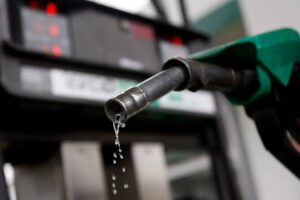
A legal practitioner and leadership consultant, Stanley Ekpa, has urged regulators to ensure that reductions in global crude oil prices are reflected in the retail cost of petrol in Nigeria, arguing that consumers should not continue to bear the burden of high fuel prices after international market conditions have improved.
In an opinion published on Monday, Ekpa said Nigerians accepted higher fuel prices when geopolitical tensions, particularly the conflict involving the United States and Iran, pushed up global crude oil prices and disrupted energy markets. However, he noted that despite the easing of those tensions and a decline in international oil prices, domestic pump prices have not fallen significantly.
He argued that while marketers quickly adjusted prices upward during the period of rising global costs, the same urgency has not been applied to reducing prices now that international conditions have improved.
Ekpa also referenced concerns raised by the Federal Competition and Consumer Protection Commission (FCCPC), which questioned why the decline in global crude prices had not translated into comparable reductions at Nigerian filling stations.
According to him, a deregulated petroleum market should respond fairly to both increases and decreases in underlying costs, rather than only passing higher costs to consumers.
The lawyer warned against suggestions by the Independent Petroleum Marketers Association of Nigeria (IPMAN) that filling stations could shut down if the government sought greater oversight of fuel pricing, insisting that deregulation does not eliminate the role of regulators in ensuring healthy competition.
He called on the FCCPC and the Nigerian Midstream and Downstream Petroleum Regulatory Authority (NMDPRA) to strengthen market monitoring, investigate possible anti-competitive practices and improve transparency in the pricing of petroleum products.
Ekpa further urged the government to accelerate domestic refining, improve crude oil supply to local refineries, stabilise the foreign exchange market and address logistics challenges that add to distribution costs.
He maintained that the success of deregulation should be judged not only by investment in the downstream sector but also by whether ordinary Nigerians benefit from fair and competitive fuel prices. According to him, operators unwilling to compete transparently should make way for those prepared to operate in the interest of both investors and consumers.