Nigeria’s indigenous oil producers, Aradel Holdings Plc and Seplat Energy Plc, recorded a combined asset value of about N19.1tn in the first half of 2026, as acquisitions, higher oil prices and stronger margins boosted their financial performance.
Financial statements for the six months ended June 2026 showed that Aradel accounted for N10.87tn of the combined assets, while Seplat held assets valued at N8.24tn.
The two companies, however, recorded their growth through different strategies.
Aradel posted the sharper increase in revenue, with earnings rising from N368.08bn in the first half of 2025 to N2.49tn in H1 2026. This represented an increase of about 577 per cent.
Seplat’s revenue grew by 30.2 per cent, climbing from $1.40bn to $1.82bn during the same period.
Aradel’s rapid expansion was largely linked to the consolidation of newly acquired upstream interests, particularly its increased ownership of ND Western and exposure to OML 34.
The company’s total assets have grown dramatically in recent years. From N923.43bn in 2023, Aradel’s assets increased to N1.75tn in 2024 and N9.90tn by December 2025. By June 2026, the figure had risen further to N10.87tn.
The expansion has also translated into stronger operating results. Aradel’s gross profit rose from N163.16bn to N1.44tn, while profit after tax increased from N146.39bn to N191.05bn.
Investment analyst Dr Vincent Nwani said Aradel’s increased ownership of ND Western had significantly expanded its exposure to the operations and cash flows of OML 34.
He also pointed to the company’s indirect interest in Renaissance, the consortium involved in acquiring Shell’s former onshore assets in Nigeria, as another potential source of growth.
However, industry experts warned that Aradel may not be able to maintain its exceptional growth rate without further acquisitions or increased production from its existing portfolio.
Former 11Plc Managing Director, Adetunji Oyebanji, said the company’s future performance would depend on how efficiently it develops the additional assets and increases production.
The Nigerian Association of Liquefied Petroleum Gas Marketers also attributed much of Aradel’s recent expansion to asset consolidation, noting that more acquisitions may be required to sustain similar growth.
Seplat benefits from prices and margins
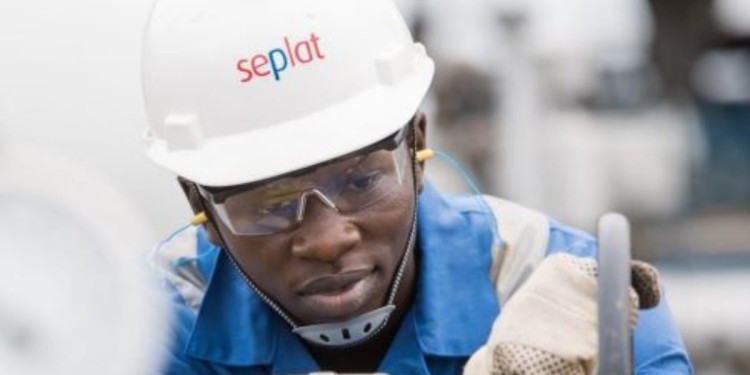
Seplat followed a different path, recording stronger financial results without a major increase in its asset base or production volumes.
The company’s revenue rose to $1.82bn, while gross profit increased by 68.4 per cent to $815.9m.
Its profit after tax recorded an even larger jump, rising almost fivefold from $27.4m in H1 2025 to $164m in the first half of 2026.
The improvement was largely supported by stronger realised crude prices and margins rather than a significant increase in production.
This means Seplat’s profitability remains sensitive to movements in international oil prices. Industry observers said the company’s ability to control production costs would become increasingly important if crude prices decline.
Seplat has nevertheless continued to strengthen its position in Nigeria’s upstream sector through the integration of its producing subsidiary and the development of the ANOH gas project, which began delivering first gas in January 2026.
The company’s adoption of the Petroleum Industry Act fiscal framework was also identified as a potential boost to its cash flow, while its listings on the Nigerian Exchange and London Stock Exchange provide access to wider pools of capital.
Nwani said Seplat plans to return more than $1bn to shareholders between 2026 and 2030, although he warned that a prolonged period of low Brent crude prices could affect its ability to maintain dividend payments.
Indigenous operators gaining ground
The financial performances of Aradel and Seplat highlight the growing influence of Nigerian-owned companies in the country’s upstream oil industry.
Oyebanji said indigenous producers could enjoy advantages in dealing with host communities and managing operating costs, potentially allowing them to keep production running with fewer disruptions.
However, industry stakeholders cautioned that stronger financial results alone do not prove that indigenous ownership has automatically improved operational efficiency.
They said a proper assessment would require longer-term data covering production levels, recovery rates, operating costs, uptime and reserve replacement.
For Aradel, the first half of 2026 was marked by a dramatic increase in scale following major asset consolidation. Seplat, meanwhile, achieved significant earnings growth largely through improved prices, margins and an expanding upstream portfolio.
The performance of both companies going forward will depend on their ability to increase production, manage costs, maximise their enlarged assets and withstand fluctuations in global crude oil prices.