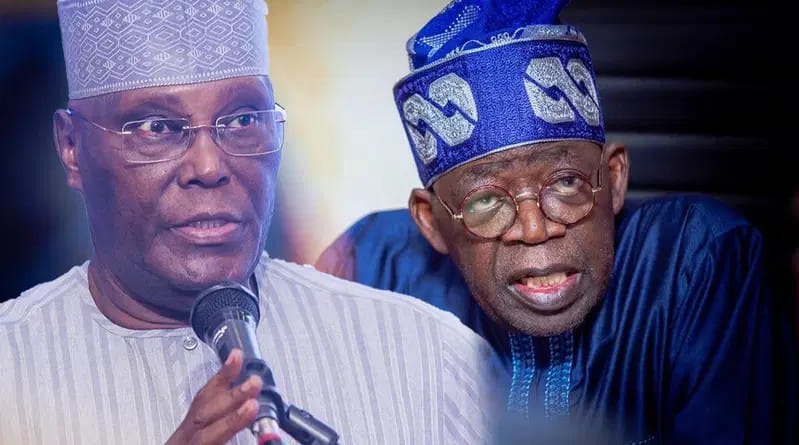
President Bola Tinubu and former Vice President Atiku Abubakar have disagreed over whether Nigeria should restore fuel subsidy, with both presenting different approaches to tackling petrol prices and the country’s energy challenges.
Tinubu rejected calls for a return to subsidy, arguing that the policy had placed a heavy burden on government finances and contributed to fiscal problems across the country.
Speaking during a meeting with Osun State Governor Ademola Adeleke at the Presidential Villa in Abuja, the President said those advocating a return to subsidy lacked an understanding of the economic consequences of the policy.
Tinubu maintained that before the removal of subsidy, several states struggled to pay workers’ salaries and pensions. He said the government is now using resources for infrastructure, healthcare, education and other programmes aimed at improving living conditions.
Atiku, however, proposed a different model under his Economic Recovery Plan, saying subsidy support should be redirected from imported petrol to locally refined products.
Under his proposal, domestic refineries would have access to crude at preferential prices in exchange for verified production and guaranteed supply to the Nigerian market.
Atiku said the system would be closely monitored, with every subsidised barrel tracked from crude allocation to refining and delivery. Refineries found diverting products, falsifying records or failing to pass benefits to consumers would lose access to the programme and face financial and legal sanctions.
He also proposed an annual spending limit approved by the National Assembly, with independent auditors responsible for verifying production and expenditure.
According to Atiku, the measure would be temporary, with support gradually reduced as Nigeria’s refining capacity expands.
He also questioned the financial implications of the Tinubu administration’s subsidy removal, citing expenses recorded in NNPC Limited’s accounts after the President announced the end of subsidy in 2023.
The Presidency rejected Atiku’s proposal, describing the former vice president’s position as a return to an outdated and costly policy.
Presidential spokesman Bayo Onanuga argued that restoring subsidy would require significant government funding and could recreate the fiscal pressures associated with the former system.
The Presidency maintained that Nigeria should focus on reforms that reflect current economic and petroleum market realities rather than return to the previous subsidy structure.
The disagreement has further placed fuel pricing and the future of Nigeria’s petroleum sector at the centre of the political debate ahead of the 2027 elections.