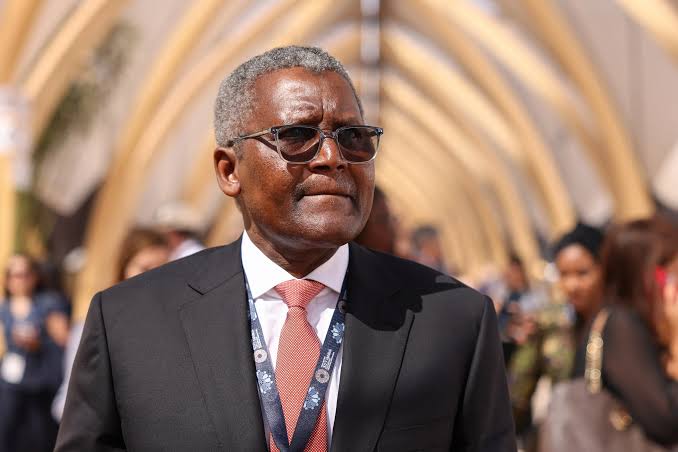
Africa’s richest man, Aliko Dangote, has accused the Petroleum and Natural Gas Workers Union (NUPENG) of imposing heavy charges on fuel trucks leaving his refinery, warning that such practices are inflating pump prices for ordinary Nigerians.
Speaking in Lagos, the industrialist claimed that the union collects up to ₦50,000 on every truck that loads petroleum products. When combined with other fees, the total could rise to as much as ₦84,000 per truck, a cost that he said is ultimately passed down to consumers.
“This is nothing but rent-seeking. The people who pay for these unnecessary levies are Nigerians at the filling stations,” Dangote argued, stressing that such burdens were part of the reason his company launched its own fleet of 4,000 Compressed Natural Gas (CNG) trucks.
The refinery boss also pushed back against NUPENG’s allegations that his company is blocking drivers from union membership. According to him, workers are free to join if they choose, but no one should be coerced. “Union membership is voluntary, just like religion—you cannot force anyone,” he said.
NUPENG President Williams Akporeha declined to give a direct answer when asked about the alleged truck fees, responding only with a cryptic remark: “₦50,000 now? No more ₦1 per litre?” In earlier reactions to similar claims, the union had dismissed the allegations and challenged accusers to produce evidence.
Industry analysts have expressed concern, questioning whether NUPENG has exceeded its mandate by acting like a tax authority. Energy law expert, Prof. Dayo Ayoade, argued that while unions are meant to protect their members, they have no legal right to collect such levies. “Is NUPENG now a revenue service? That’s the real question,” he said.
The dispute comes against the backdrop of rising fuel prices and tensions between Dangote’s refinery and oil transporters. In recent weeks, NUPENG blockaded depots and disrupted supply in protest over unionisation issues, prompting government intervention and a court order restraining further blockades.
Analysts warn that hidden costs in petroleum distribution could worsen the hardship faced by households and businesses already grappling with high energy prices. They say the federal government must step in to regulate truck-loading fees, protect workers’ rights, and prevent additional burdens on consumers.
Dangote maintains that his new CNG-powered fleet will shield operations from union pressure and reduce reliance on diesel, aligning with Nigeria’s push toward cleaner and cheaper energy alternatives.