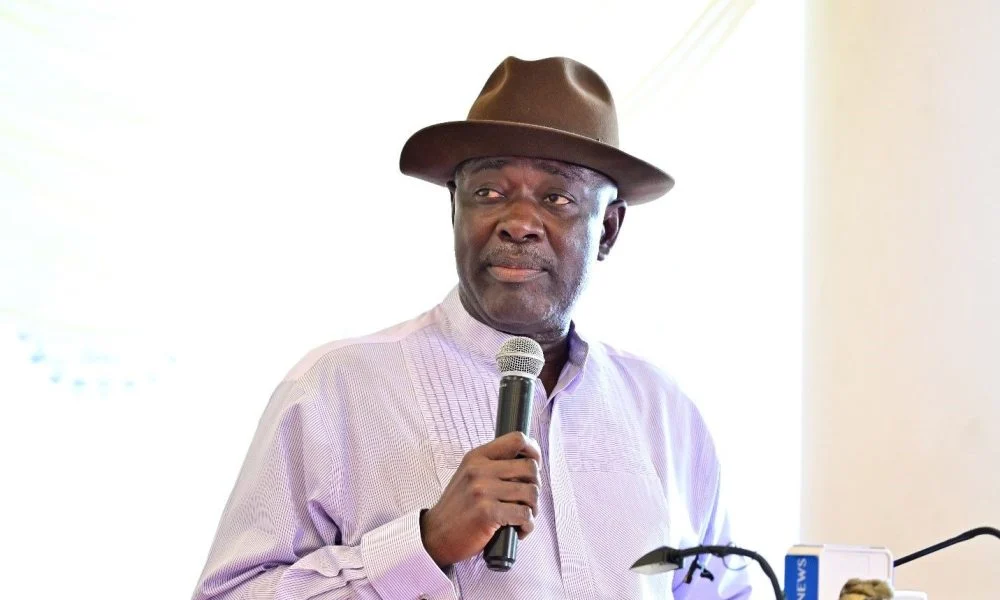
The Minister of State for Petroleum Resources (Oil), Heineken Lokpobiri, has called for affordable and reliable energy supplies in developing countries, warning that high costs and inadequate access could slow industrial growth.
Lokpobiri made the appeal on Sunday in Riyadh, Saudi Arabia, during the 17th International Energy Forum Ministerial, which he co-hosted with Italy’s Minister of the Environment and Energy Security, Gilberto Fratin.
He said international energy policies must consider the different economic conditions, infrastructure and investment capacity of countries, particularly developing economies seeking to expand their industries.
The minister argued that energy security should involve more than protecting existing supplies, stressing that millions of people still lack reliable electricity while businesses struggle with high operating costs.
He noted that manufacturers cannot operate efficiently without dependable power, while entrepreneurs face difficulties expanding their businesses when energy is either unavailable or too expensive.
Lokpobiri maintained that African countries should be able to pursue economic development while meeting environmental obligations. He said responsible oil and gas production could continue alongside the expansion of natural gas, renewable energy and cleaner technologies.
He also called for sustained investment across the energy industry, warning that delays in developing projects could lead to future supply shortages.
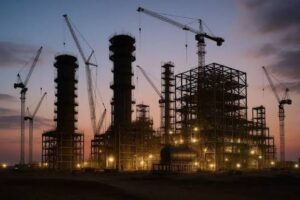
According to him, investment is required in oil and gas production, refining, pipelines, storage facilities, transportation networks, electricity grids and renewable energy infrastructure.
He explained that energy projects often require years of financing, regulatory approvals, engineering and construction before they can deliver additional supplies to the market.
Lokpobiri urged governments to create a stable investment environment through predictable regulations, faster approval processes and respect for agreements with investors.
He said these conditions were necessary to attract the capital required to expand energy production and improve infrastructure.
The minister further advocated a diversified energy mix, noting that oil and gas would remain important alongside renewable energy, hydroelectricity and nuclear power. He said countries needed multiple energy sources to strengthen supply security and withstand disruptions.
He warned that geopolitical tensions and disruptions to major energy transportation routes could trigger price increases, raising the cost of transportation, production and essential goods for businesses and households.
Lokpobiri urged countries to strengthen their energy infrastructure and reduce excessive dependence on particular supply sources and transportation routes to minimise the impact of future crises.
He also emphasised cooperation between producing and consuming nations, noting that producers require dependable markets while consumers need reliable supplies.
The minister described the International Energy Forum as an important platform for governments, industry operators and international institutions to discuss challenges affecting global energy markets and develop strategies for long-term energy security.
He maintained that energy resilience depends on early planning, sustained investment and stronger infrastructure rather than waiting for a crisis before taking action.