Africa must add at least 16 gigawatts (GW) of new grid-connected power annually until 2050 or risk facing a severe energy crisis, the Africa Finance Corporation (AFC) warns in its newly released State of Africa’s Infrastructure Report 2025.
“To meet its most basic energy needs, Africa should aim for at least 16 GW annually until 2050,” the report stated. “Considering population growth, such capacity addition would bring average generation capacity to 0.300 MW per thousand capita, at par with levels seen in India and Indonesia today.”
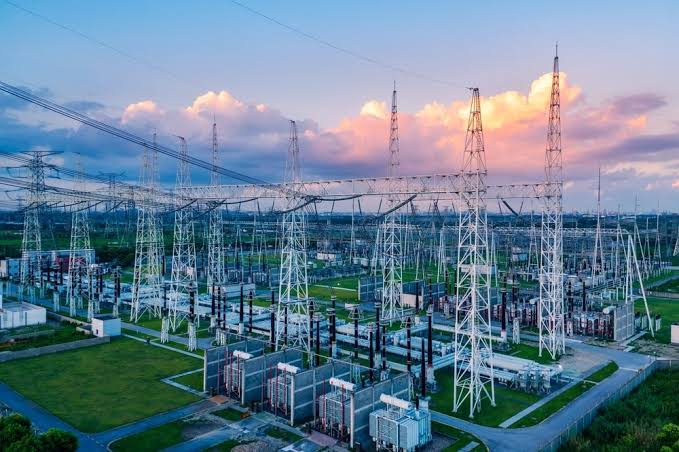
The AFC emphasized that alongside generation, Africa must also invest between $3.2 billion and $4.3 billion every year in transmission infrastructure. “To meet such transmission needs, Africa will require at least $3.2–4.3 billion annually through 2040,” the report noted.
Despite the challenge, AFC sees massive investment potential across solar PV, gas-to-power, hydropower, battery storage, and grid modernization. “With the right investments and reforms, Africa can build the world’s most dynamic, integrated, and future-ready energy system, powering growth for the next generation,” the AFC added.
The Corporation pointed to Latin America—particularly Brazil—as a model for attracting private capital. “Brazil’s grid has grown from 105,000 km in 2012 to 184,000 km in 2023, with 86,000 km of new lines auctioned over the past 16 years,” the AFC stated. “In 2024 alone, Brazil’s first transmission tender attracted $3.65 billion—equal to Africa’s annual transmission investment need.”
The report stressed that “creating a viable investment pipeline—anchored in regulatory reform, unbundled utilities, and long-term planning—is essential to crowd in private capital at scale.”
As Africa’s largest economy, Nigeria is expected to play a key role in achieving the continent’s energy goals. Currently, the country’s power generation has peaked at 5,713.6 MW—far below what’s needed to meet demand.
In November 2024, the Nigerian government estimated it would need $10 billion in private investment over the next 5 to 10 years to provide 24-hour electricity supply.
By April 2025, Minister of Power Chief Adebayo Adelabu said 150 million Nigerians now have access to adequate electricity, but around 80 million still lack reliable power. He credited progress to Nigeria’s participation in the “Mission 300” initiative, a World Bank and AfDB-led plan to expand electricity access to 300 million Africans by 2030.
With the AFC’s latest report, Nigeria’s path forward is clearer: increase generation, invest in transmission, and open up the power sector to serious reforms and private capital.