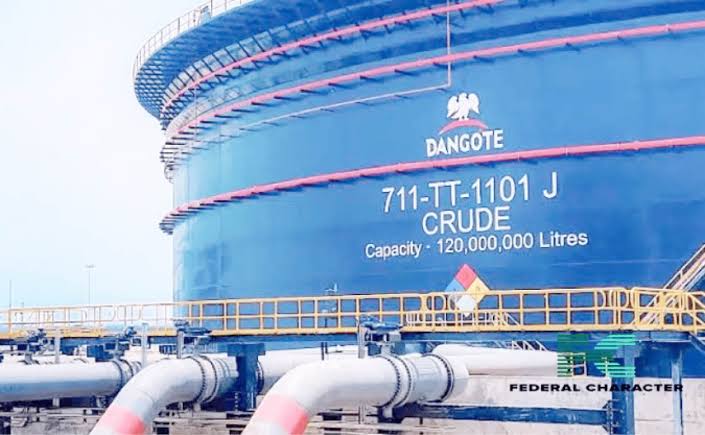
Nigeria’s Dangote Group has reached a major milestone after its flagship facility, the Dangote Petroleum Refinery, recorded the highest jet fuel export volumes in the world for April 2026.
Industry data from S&P Global Commodities at Sea indicates that the refinery briefly topped global rankings in aviation fuel exports during a period of instability in key Middle Eastern energy routes. Disruptions linked to geopolitical tensions in the region, including concerns around major shipping corridors, contributed to shifts in global fuel sourcing patterns.
The refinery, which processes up to 650,000 barrels of crude oil per day, has been operating at close to full capacity following a gradual scale-up phase. Its flexible production system allows it to refine multiple crude types, helping it adjust output toward high-demand products like jet fuel when global conditions change.
Company executives say the facility increased aviation fuel production significantly during the period, taking advantage of stronger international demand for non-Middle Eastern supply sources. This repositioning helped push the Nigerian plant into a leading global export position for jet fuel.
The facility’s growing influence also reflects a broader shift in strategy by Aliko Dangote, who has been steering the refinery toward becoming a major global trading hub rather than focusing solely on domestic fuel supply.
Beyond refining crude oil, the company is increasingly engaging in international trading of both raw and refined petroleum products. Plans are also underway to expand crude sourcing options and strengthen logistics networks across Africa, including storage and transport projects in several regions.
In the long term, the refinery aims to significantly expand its processing capacity, potentially more than doubling output. This would require wider global crude procurement and deeper integration into international energy markets.
At home, the refinery’s operations have also influenced Nigeria’s aviation sector, where fuel pricing pressures have affected airline costs. In response, the company adjusted local jet fuel pricing and introduced short-term credit arrangements to support operators.
The development marks a notable shift for Nigeria’s downstream oil industry, positioning the Dangote refinery as an emerging player in global fuel trade at a time when energy supply chains are becoming increasingly unpredictable.