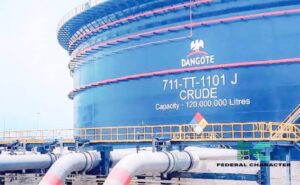
Nigeria’s energy landscape has entered a new era with the rise of the Dangote Petroleum Refinery, Africa’s largest single-train refining complex. The facility, based in Lagos, is reshaping both national and regional fuel supply while easing Nigeria’s long dependence on imports.
With a capacity of 650,000 barrels per day, the refinery has already cut Nigeria’s refined fuel imports from about 500,000 barrels daily in 2023 to just 88,000 by early 2025. This shift has ended Nigeria’s long-standing status as Africa’s biggest petrol importer, a title now held by South Africa.
The economic benefits are striking. Analysts estimate the country could save up to $10 billion annually in foreign exchange, providing much-needed stability for the naira and relief for public finances once weighed down by subsidy and import costs.
Beyond Nigeria, the refinery is also supplying neighboring markets. Between June and July alone, one million tonnes of petrol were exported, while diesel, jet fuel, and gasoil have been shipped to countries including Togo, Senegal, Benin, and Gabon. These supplies are helping West and Central Africa reduce their reliance on Europe and Asia for fuel.
The refinery’s reach now extends to global markets as well. The United States recently imported 1.7 million barrels of jet fuel in a single month, while Saudi Aramco purchased shipments totaling 130 million liters, proving the competitiveness of African refined products on the world stage.
Locally, aviation is one of the clearest winners. Nigeria’s jet fuel imports have dropped sharply from 13,000 barrels per day to just 5,000, with the Dangote refinery now meeting most domestic demand and generating surplus for export.
Experts see this as more than just an industrial milestone. For the first time, Africa is moving beyond crude oil exports to capture greater value in refined petroleum products, boosting bargaining power and regional energy security.
However, concerns remain over transparency, monopoly risks, and how this achievement fits into Nigeria’s climate commitments. While the refinery reduces costs and strengthens supply chains, critics warn it could also entrench fossil fuel use at a time when the country has pledged net-zero emissions by 2060.
For now, the refinery stands as a symbol of ambition and self-reliance. Whether it becomes remembered as the project that fueled prosperity or one that slowed the push for cleaner energy will depend on policy choices in the years ahead.