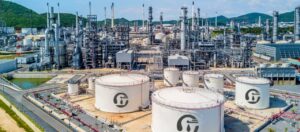
Nigeria’s 650,000-barrel-per-day Dangote Petroleum Refinery is scheduled to receive five shipments of crude oil from the Nigerian National Petroleum Company Limited (NNPC Ltd) next month, as part of efforts to maintain steady operations and boost local refining.
According to market sources, the December-loading cargoes will include various Nigerian crude grades such as Amenam, Bonny Light, CJ Blend, Forcados, and Qua Iboe. One of the shipments, originally slated for late December, is expected to arrive in early January.
The allocation continues a pattern of regular crude supplies to the privately owned refinery, following similar deliveries in October and November. Data showed that Nigerian crude accounted for the majority of the feedstock processed at Dangote’s plant in October, surpassing imports of U.S. West Texas Intermediate (WTI) crude.
Industry traders noted that while WTI often remains cheaper due to pricing advantages, rising transatlantic shipping costs and softening European demand have made Nigerian grades more attractive for the refinery.
The Dangote Group recently announced plans to expand its refining capacity from 650,000 barrels per day to 1.4 million barrels per day, a move that could position the complex as one of the largest single-train refineries globally.
However, questions have persisted over the adequacy of domestic crude supply. Although the federal government introduced a “naira-for-crude” arrangement to help local refineries access feedstock without relying on dollar payments, Dangote Industries has maintained that it still struggles to obtain enough crude to operate at full capacity.
At a recent virtual discussion themed “Dangote, Oil and Power in Nigeria,” experts emphasized the refinery’s significance to Nigeria’s industrial and economic future.
Energy analyst Dr. Mobolaji Aluko described the facility as a “strategic national asset” and urged regulators to provide support rather than heavy-handed oversight. He noted that Nigeria’s four state-owned refineries have jointly managed to refine only 144,000 barrels of oil daily in over six decades, a fraction of what Dangote’s plant can handle.
Similarly, political economist Prof. Jibrin Ibrahim called for collective support for the refinery, saying it represents a breakthrough after decades of failed attempts to rehabilitate government-owned plants. Labour leader Owei Lakemfa, however, cautioned that workers’ rights must be safeguarded as the new refinery scales up operations.
With NNPC’s latest crude allocation, industry watchers are hopeful that the refinery will continue ramping up production, potentially reducing Nigeria’s dependence on imported petroleum products and stabilizing fuel supply in the months ahead.