Nigeria’s petrol supply landscape shifted sharply in April as the Dangote Petroleum Refinery emerged as the dominant source of fuel for the country, while imports declined significantly.
New data released by the Nigerian Midstream and Downstream Petroleum Regulatory Authority (NMDPRA) showed that the refinery raised its average daily petrol supply to 40.7 million litres in April, up from 34.2 million litres recorded in March. This represented a 19 percent increase within one month.
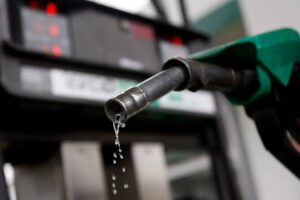
Overall petrol availability in the country, combining local refining and imports climbed to 44.4 million litres per day in April, compared to 40.1 million litres in March.
However, fuel importation reduced sharply during the same period. Daily petrol imports fell by 37.3 percent to 3.7 million litres from 5.9 million litres in the previous month, underscoring the growing impact of domestic refining.
The regulator also reported a drastic drop in imported crude oil volumes, which declined by more than 95 percent in April. In contrast, crude oil deliveries from Nigerian upstream producers to local refineries increased by 56 percent, reaching nearly 18 million barrels.
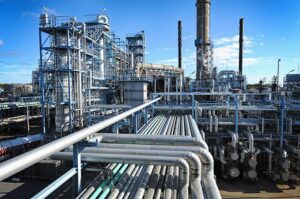
According to the NMDPRA, the Dangote facility operated at an average capacity utilisation of 99.12 percent in April and ran at full capacity on most days of the month. During this period, the refinery’s daily output included 53.6 million litres of premium motor spirit (petrol), 23.6 million litres of diesel, and 22.9 million litres of kerosene and aviation fuel. Out of this production, an average of 40.7 million litres of petrol was released into the Nigerian market each day.
Nigeria’s total petrol consumption in April stood at 51.1 million litres per day, meaning the Dangote refinery alone accounted for about 79.6 percent of national usage.
The rise in supply coincided with multiple price changes by the refinery between March and April, driven by volatility in global crude oil prices. In early April, the gantry price of petrol was adjusted upward to around N1,275 per litre from N1,200.
While private refining activity surged, government-owned facilities, the Port Harcourt Refining Company, Warri Refining and Petrochemical Company, and Kaduna Refining and Petrochemical Company did not record any production throughout April.
Among smaller refineries, the Edo Refinery and Petrochemicals Company posted the highest utilisation rate at 79.2 percent. The WalterSmith Refinery followed at 56.14 percent, while the Aradel Refinery recorded 33.95 percent. Other modular plants, including OPAC and Duport, remained inactive during the month. Collectively, operational modular refineries contributed about 0.559 million litres of fuel daily.
The report indicated that the average retail price of petrol in April was N1,271.50 per litre in Lagos, N1,326 in Abuja, and N1,371.50 in Maiduguri. In terms of reserves, Nigeria maintained 18 days of petrol sufficiency, 39 days for diesel, and 70 days for aviation fuel.
Cooking gas supply averaged 4,545 metric tonnes per day against an estimated consumption of 4,818 metric tonnes. Gas deliveries to the power sector stood at 0.549 billion standard cubic feet per day, while industries received 0.468 Bscf per day.