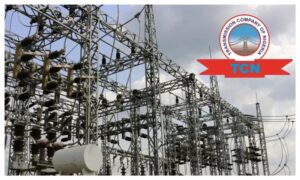
The Federal Government has launched a technical assessment of Nigeria’s electricity infrastructure to identify critical gaps and ensure public funds are invested in projects that will improve power supply.
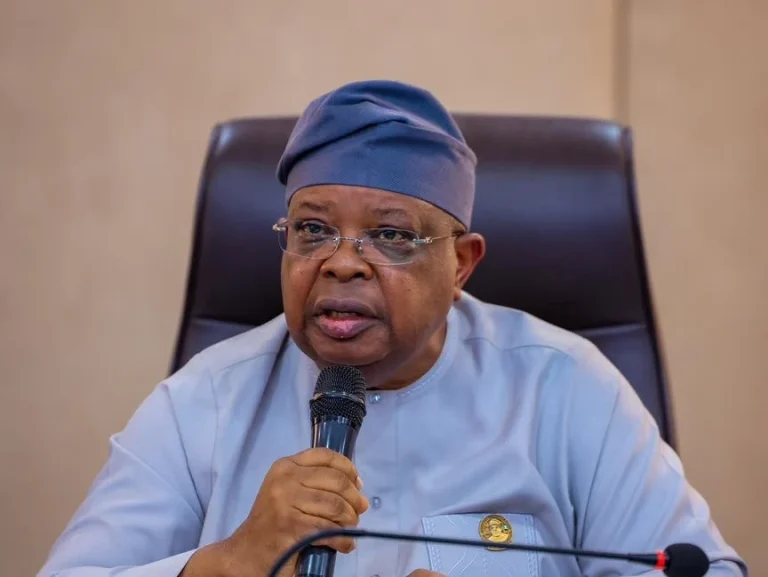
Minister of Power Joseph Tegbe said the audit, which began about four weeks ago, is expected to be completed in the coming weeks. He explained that the findings would help the government determine existing infrastructure needs and decide which areas require urgent attention across generation, transmission and distribution.
The assessment forms part of a three-stage plan to reform the power sector. The stabilisation phase began in June 2026 and will run until February 2027, followed by a scaling-up phase from March 2027 through 2028. The final phase, focused on transforming the sector, is expected to begin in 2028.
Tegbe said challenges persist throughout the electricity supply chain. Gas shortages, pipeline vandalism and unfavourable commercial arrangements have affected supplies to power plants, while the transmission network faces capacity constraints and repeated attacks on critical infrastructure.
He added that distribution companies record technical and commercial losses, alongside revenue collection losses, estimated at between 30 and 40 per cent.
The minister disclosed that the sector’s outstanding debt stood at N3.3tn, with N1.23tn already paid. He said the government was working to prevent additional unpaid obligations and exploring payment assurance measures and lawful arrangements to offset eligible debts.
As part of the reform plan, the government has identified three priority energy corridors: Lagos-Ogun, Benin-Edo-Port Harcourt, and Abuja-Kaduna-Kano. Tegbe said Lagos-Ogun accounts for about half of Nigeria’s energy demand, making it a key area for testing measures that could later be extended to other parts of the country. The Abuja franchise area will also serve as a pilot.
He said the government was coordinating with state administrations and private-sector operators rather than relying solely on federal intervention. According to him, a meeting with the Lagos State governor and key power-sector institutions produced a strategy aimed at achieving round-the-clock electricity supply in the corridor.
Tegbe also cited the Electricity Act 2023 as an important part of the reform process, noting that it allows states to establish their own electricity markets while remaining connected to the national grid.
On the proposed revival of the Mambilla power project, the minister said President Bola Tinubu had directed that efforts be made to move the project forward. Tegbe and the president’s special adviser on power, Lanre Babalola, have been tasked with engaging the 19 northern state governments.
The government is also planning to train 5,000 young Nigerians to install and maintain electricity meters, with an eventual target of 50,000 trainees. Tegbe said proper metering was essential to improving revenue collection, while Babalola would lead efforts to reduce technical and commercial losses.
The minister said the broader objective was to make better use of existing electricity assets, improve industrial productivity and create conditions that would encourage further investment in Nigeria’s power sector.